How Does Tubi Make Money? Inside Fox’s Free Streaming Business
How does Tubi make money without charging you? Almost all of it comes from ads, shared with studios. See how Fox's free streaming business adds up in 2026.
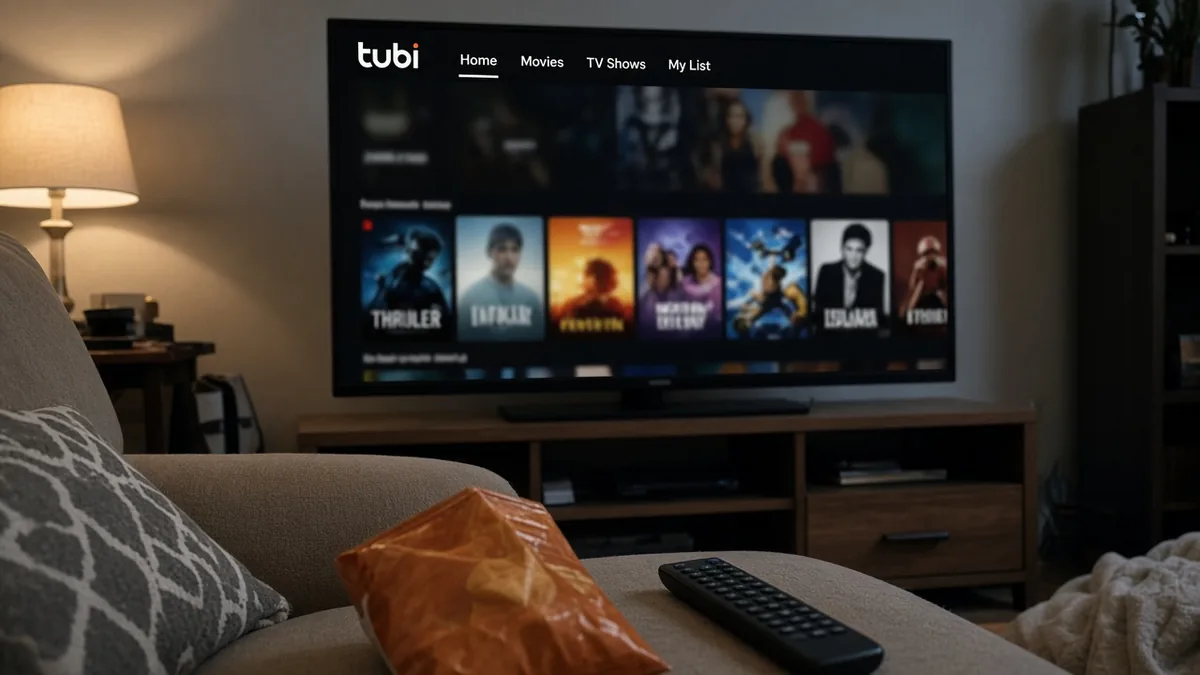
How does Tubi make money when it never charges you a cent? Tubi earns nearly all of its revenue from advertising: it streams movies and TV shows for free, sells the ad breaks that run before and during each title, and pays part of that money to the studios and creators who supply the content.
It’s no longer a side project. Fox, which owns Tubi, says revenue passed $1.1 billion in fiscal 2025 and grew more than 25% in fiscal 2026, the year to June 30, 2026. That points to roughly $1.4 billion a year, although Fox doesn’t publish the exact number.
Key takeaways
- Advertising is Tubi’s only real revenue stream. There’s no subscription and no paid ad-free tier.
- Fox disclosed over $1.1 billion in Tubi revenue for fiscal 2025 and growth of more than 25% for fiscal 2026. My estimate for fiscal 2026 is about $1.4 billion.
- Tubi earns roughly 10 cents for every hour people watch, and that rate rose about 4% in fiscal 2026.
- Tubi turned its first quarterly profit in the September 2025 quarter and has hovered at breakeven or slightly better since.
Tubi’s business model in one picture
Tubi is an AVOD service, short for advertising-based video on demand. You pick a title, the app plays it, and the ad breaks pay the bills.
That creates a different incentive from Netflix. A subscription service gets paid whether you open the app this month or not (our Netflix SWOT analysis covers that model). Tubi only gets paid while you’re actually watching, and CEO Anjali Sud has said that relying on ads alone changes how the company thinks about everything.
Brands, direct-response marketers, automated ad buyers
Sells the ads, runs the free app, keeps what’s left
Studios, distributors, independent creators
Smart TVs, streaming sticks, phones, web
Pay nothing. Their viewing time is what advertisers buy.
How money moves through Tubi: advertisers fund it, viewers watch free, and content owners get paid under each deal.
How does Tubi make money from ads?
Fox doesn’t split Tubi’s ad sales by type, but its earnings calls point to four main sources.
- Upfront brand deals. Big advertisers commit budgets in advance during the annual upfront negotiations, where Fox sells Tubi alongside Fox News and Fox Sports. Fox said its 2026 upfront delivered double-digit volume growth across sports, news and Tubi.
- Direct-response and partner channels. Performance-focused advertisers and automated buying fill the remaining slots. Fox credited progress in both for Tubi’s growth in mid-2025.
- Live events. Tubi streamed Super Bowl LIX for free in February 2025, which Fox called the most-streamed Super Bowl ever, and later simulcast a Thanksgiving NFL game. Fox has credited big events like these with bringing new users to the app.
- Sharper targeting. Sud has said Tubi uses AI to match ads to the scene on screen, such as a candy ad during Willy Wonka. Better-matched ads can sell at higher prices.
Most Tubi viewing is on demand rather than live channels, according to Fox CEO Lachlan Murdoch. That sets it apart from its closest free rival, Paramount’s Pluto TV, which leans much harder on linear channels, as we explain in how Pluto TV makes money.
How much money does Tubi make?
Fox reports Tubi inside its Television segment and books the money as advertising revenue, so there’s no standalone Tubi income statement. Its earnings calls and proxy statements still disclose enough to build a solid picture.
| Metric | Fiscal 2025 | Fiscal 2026 |
|---|---|---|
| Revenue | Over $1.1 billion | About $1.4 billion (est.) |
| Revenue growth | 29% | Over 25% |
| Total view time | About 11 billion hours | About 13.2 billion hours |
| Monthly active users | Over 100 million | 110 million at year end |
| Share of US TV viewing (Nielsen) | Peaked at 2.2% | About 2.2% average |
| Revenue per hour watched | About 10.0 cents (est.) | About 10.4 cents (est.) |
Sources: Fox earnings calls (August 2025, August 2026) and proxy statements (September 2025, September 2026). Fiscal years end June 30. “Est.” figures are my calculations from Fox’s disclosures.
The number that matters: about a dime an hour
Divide revenue by viewing time and Tubi earns roughly 10 cents for every hour someone watches. That gives it two ways to grow: more hours, or more money per hour.
Fiscal 2026 did both. View time rose 20% while revenue rose more than 25%, so each hour earned around 4% more.
By quarter, revenue grew 27%, 19% and 23%, then 35% in the June 2026 quarter, Tubi’s biggest ever. View time rose only 17% that quarter, so pricing did much of the work. Murdoch said the World Cup’s direct boost to Tubi was meaningful but small.
For scale, $1.4 billion would be about 19% of Fox’s $7.34 billion in fiscal 2026 advertising revenue and about 8% of its $17.13 billion total, based on Fox’s August 2026 earnings release. Murdoch also said Tubi now brings in about 10 times the revenue it did when Fox bought it, which implies Tubi started near $140 million a year.
Where the money goes: paying for shows and movies
Content is Tubi’s biggest cost. Its library passed 350,000 movies and TV episodes in fiscal 2026, and Tubi made very little of it. Most comes through licensing deals; its UK launch lineup in July 2024, for example, included titles from Disney, Lionsgate, NBCUniversal and Sony Pictures.
How TV shows make money on free streaming services
Rights holders usually get paid in one of two ways. A license fee is a set payment to stream a title for an agreed period. A revenue share pays the owner a cut of the ad money the title earns, so it pays more when more people watch.
Tubi doesn’t publish its deal terms or the mix between the two. The math is the same either way: a title only makes money for Tubi if the ads it attracts are worth more than Tubi pays for it.
Tubi also funds its own shows and films, with 50 new originals premiering in fiscal 2026. Originals cost more up front, but they give Tubi exclusive titles to market.
Distribution is the other cost. Tubi’s app runs on smart TVs, streaming sticks, phones and the web, and platform owners such as Roku have long asked streaming apps for a share of their ad inventory in return for placement. Tubi’s terms aren’t public.
Does Tubi pay filmmakers?
Yes, based on how much their work gets watched. Sud told Fast Company that anyone can put content on Tubi through a non-exclusive revenue share, much like YouTube’s model. Its Tubi for Creators program added more than 20,000 episodes from over 400 creators in fiscal 2026.
Many independent filmmakers reach Tubi through aggregators or distributors, which take their own cut before paying out. What lands in a filmmaker’s account depends on hours watched, ad prices at the time and those middlemen’s fees. Tubi doesn’t publish rates, and payout stories on filmmaker forums vary wildly, so treat any single figure you see online as one data point.
Is Tubi profitable?
Only recently, and only just. Fox said Tubi turned its first quarterly profit in the three months to September 2025, earlier than expected. In May 2026, CFO Steve Tomsic said Tubi had come in slightly better than breakeven, its third straight quarter at breakeven or better.
On roughly $1.4 billion of revenue, that’s a thin margin. Fox’s net investment in digital initiatives, including Tubi and Fox One, fell to under $200 million in fiscal 2026 from just under $300 million a year earlier. Fox doesn’t disclose Tubi’s margin, though, so anyone quoting an exact profit figure is estimating.
Who owns Tubi, and why the Roku deal matters
Fox Corporation has owned Tubi since 2020, when it paid $440 million for a service with about 25 million monthly users. Farhad Massoudi founded Tubi, which launched in 2014, and Sud, the former Vimeo chief, has run it since September 2023. Fox itself is controlled by the Murdoch family, as we cover in who owns Fox News.
Reuters reported that Fox funded the Tubi purchase by selling the 5% stake it held in Roku. In June 2026, Fox agreed to buy all of Roku in a cash-and-stock deal worth about $22 billion, expected to close in the first half of 2027. Roku’s own free service, The Roku Channel, will stay separate from Tubi.
My take: the Roku deal could matter more to Tubi’s economics than any content deal. Fox would own one of the main screens where people find Tubi, plus Roku’s first-party viewer data for targeting. Every extra cent Tubi earns per hour across 13.2 billion hours is about $130 million in revenue.
The counterpoint, raised by TD Cowen analyst Doug Creutz, is that media companies buying distribution platforms have a poor track record. Tubi’s dime an hour is proven. The Roku upside isn’t yet.
Other questions about Tubi
Can I get paid for watching movies on Tubi?
No, Tubi doesn’t pay viewers. You pay with your attention by watching ads, and that attention is what Tubi sells to advertisers. Be wary of apps promising cash for streaming movies, since legitimate paid viewing is mostly limited to market research panels and test screenings that rarely pay much.
Is there a paid or ad-free version of Tubi?
No. Tubi describes itself as 100% free and ad-supported, so every title carries ads. Fox’s paid service, Fox One, launched in August 2025 at $19.99 a month for Fox’s live channels and shows, and it isn’t an ad-free version of Tubi.
What is the 2.5 rule for movies?
It’s an industry rule of thumb that a film needs to gross about 2.5 times its production budget at the box office to break even, because cinemas keep a large share of ticket sales and marketing adds heavy costs. Streaming licenses, including deals with services like Tubi, are among the later income streams that help films recover costs.


Discussion