Who Owns Valve? Gabe Newell, His Stake and What’s Actually Known
Who owns Valve? Gabe Newell, the co-founder Forbes says holds at least half of the private company behind Steam. Here's his stake and who owns the rest.
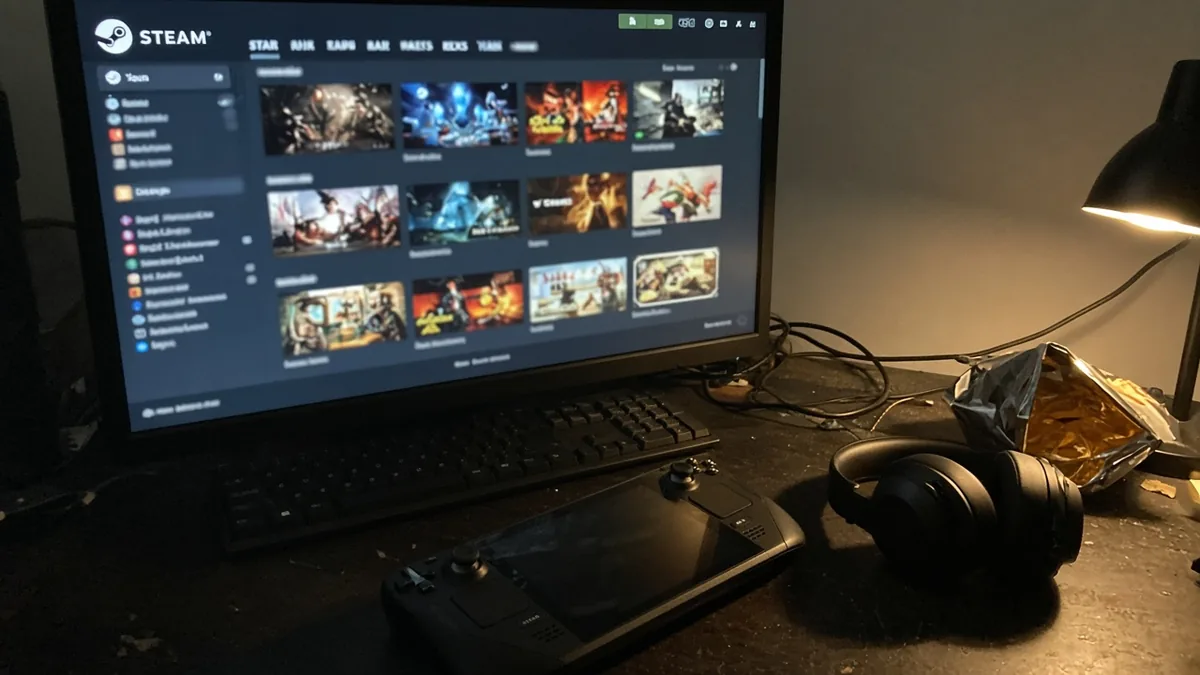
Gabe Newell owns Valve, or at least the biggest piece of it. Valve Corporation, the company behind Steam, Half-Life and Counter-Strike, is privately held, and Forbes estimates that Newell, its co-founder and president, owns at least half of it.
Who owns the rest of Valve has never been made public. Valve has no stock listing and no announced outside investors, and it doesn’t publish a share register. Any precise percentage you’ve seen, including the often-repeated “50.1%”, is an estimate.
Key takeaways
- Valve is a private company headquartered in Bellevue, Washington. There’s no parent company and no public stock.
- Forbes estimates Newell owns at least half of Valve. His co-founder Mike Harrington sold his stake to Newell in 2000.
- Forbes’ own stake estimate has swung from “more than 50%” to “at least a quarter” and back to “at least half”, which explains much of the swing in Newell’s reported net worth.
- Most of what’s known about Valve’s internals, such as its 336 employees in 2021, came out through antitrust litigation, not company disclosures.
Who owns Valve, layer by layer
“Who owns Valve” can mean four different things. Here’s what’s confirmed and what’s estimated for each.
| Layer | Who | Status |
|---|---|---|
| Legal owner | Valve Corporation’s private shareholders; no parent company | Confirmed private |
| Control (voting) | Gabe Newell, estimated at least 50% | Forbes estimate |
| Other shareholders | Not disclosed | Unknown |
| Management | Newell as president; a flat structure with no traditional managers | Described in Valve’s 2012 handbook |
| Brands | Steam, Half-Life, Portal, Counter-Strike, Dota 2, Steam Deck | Owned by Valve |
The useful split is between control and the rest. Even if Newell’s stake were a little under half, nobody has suggested any other shareholder or group comes close to challenging him.
Does Gabe Newell own 100% of Valve?
No, or at least nobody credible says he does. Newell and Mike Harrington, both former Microsoft employees, founded Valve in Kirkland, Washington, on August 24, 1996. Harrington sold his stake to Newell in 2000, which left Newell as the dominant owner.
Forbes has never credited Newell with the whole company, which implies other shareholders exist. Neither Valve nor Newell has said who they are or how much they hold.
How big is Gabe Newell’s stake? Forbes keeps changing its mind
Forbes is the main public source for Newell’s stake, and its view has moved more than most readers realize. Dividing his estimated net worth by the estimated stake gives a rough ceiling for what Forbes thinks Valve is worth. It’s a ceiling, not a valuation, because his net worth also includes cash, property and other investments.
| Date | Forbes stake estimate | Newell net worth (Forbes) | Implied Valve value, at most |
|---|---|---|---|
| 2011 to 2012 | More than 50% | $1.5bn | About $3bn |
| October 2017 | Just over half | $5.5bn | About $11bn |
| December 2021 | At least a quarter | $3.9bn | Up to $15.6bn |
| October 2026 | At least half | $10.2bn (real-time) | Up to about $20bn |
Sources: Forbes estimates as reported by GameSpot and MCV (2011 to 2012), PC Gamer (2017), later Forbes reporting, and Forbes’ real-time profile (October 27, 2026). Implied value is our calculation: net worth divided by estimated stake.
The 2021 dip is the interesting row. Newell’s reported fortune fell from $5.5bn to $3.9bn, but that wasn’t Valve shrinking. Forbes roughly halved its stake assumption, from just over half to at least a quarter, so the drop says more about the stake guess than about Steam’s business.
Our read: the stake percentage is the shakiest number in any Valve ownership story. When you see Newell’s net worth jump or fall by billions, check whether Forbes changed the stake before assuming Steam had a good or bad year. You can see the current figure on Forbes’ Gabe Newell profile.
Who runs Valve day to day?
Newell is Valve’s president (Forbes lists him as CEO) and the face of the company. Below him, Valve is famously flat. Its employee handbook, published in 2012, describes a company without traditional bosses where staff choose which projects to work on.
The company is also tiny for its influence. Court documents from the Wolfire antitrust case, which were improperly redacted and spotted in 2024, showed Valve had 336 employees in 2021: 181 in games, 79 on Steam, 41 in hardware and 35 in admin. The same documents showed $444.5m in gross pay that year.
Valve’s handbook claims its profit per employee is higher than Google’s, Amazon’s or Microsoft’s. Valve has never published the figures to prove it, so treat that as a company claim.
Is Valve owned by Microsoft, Tencent or Epic?
No. The Microsoft link is purely historical: both founders worked there before starting Valve. Microsoft has never owned Valve.
Tencent owns Riot Games and holds a large minority stake in Epic Games, but it has no announced stake in Valve. Epic, meanwhile, is a rival: its Epic Games Store competes directly with Steam.
Gaming ownership is often more tangled than it looks. Discord, the chat app most PC gamers keep open next to Steam, has its own ownership story; we cover who owns Discord separately.
Is Valve bigger than Riot?
By headcount, no. Valve had 336 staff in 2021, while Riot employs thousands. By reach, Valve arguably wins, because Steam is the default store for PC games from most publishers. Neither company publishes revenue: Valve is private, and Riot’s numbers sit inside Tencent’s accounts.
Is Gabe Newell a billionaire?
Yes. Forbes has counted him as a billionaire since its 2012 rich list. Its real-time estimate put him at $10.2bn on October 27, 2026, and he ranks No. 153 on the 2026 Forbes 400. That figure rests almost entirely on Valve, so it’s only as reliable as the stake estimate above.
Newell has also put money into ventures outside gaming, including marine research organization Inkfish, brain-computer interface company Starfish Neuroscience and, according to Boat International, Dutch superyacht builder Oceanco. None of these changes who controls Valve.
Who is suing Steam for $900 million?
That’s the UK case brought by digital rights campaigner Vicki Shotbolt. Filed in June 2024 on behalf of an estimated 14 million UK Steam users, it seeks up to £656m, roughly $900m. It argues that Valve’s 30% commission and its terms with publishers pushed up prices. In January 2026, the Competition Appeal Tribunal allowed the claim to proceed. No wrongdoing has been proven.
Valve also faces a US antitrust case first filed by Wolfire Games in 2021, combined with a similar Dark Catt Studios claim in 2022 and granted class-action status in November 2024.
For ownership watchers, these cases matter for a simple reason: litigation is the main way Valve’s private numbers ever become public. The employee counts above exist only because of a lawsuit.
FAQ
Can I buy Valve stock?
No. Valve has never held an IPO and its shares don’t trade on any exchange. There’s no ticker symbol and no fund that holds Valve. Any website offering “Valve shares” or “pre-IPO Valve stock” deserves heavy skepticism, because there’s no public evidence that existing shareholders sell to outsiders.
Who will own Valve after Gabe Newell?
Nobody knows publicly. Valve hasn’t announced a succession plan, and because it’s private, it doesn’t have to. Newell’s shares would pass however he has arranged his estate, which could mean family, trusts or a sale. Until Valve says something, any named successor is speculation.
Why Valve stays private
My take: Valve’s ownership isn’t trivia. It’s the reason the company behaves the way it does.
With no outside investors, there’s nobody to demand quarterly growth, a cheaper store cut or an IPO. That freedom paid for long, risky bets like Steam in 2003 and the Steam Deck in 2022, and it lets a company of a few hundred people set the rules for most of PC gaming. For context on how big that market is, see our gaming statistics.
The flip side is that nobody inside can force change either. That’s why the real pressure on Valve today comes from courts and regulators, not shareholders. As long as Newell holds control, those are the only levers that can move it.


Discussion