Who Owns Nike? Shareholders, the Knight Family and Swoosh LLC
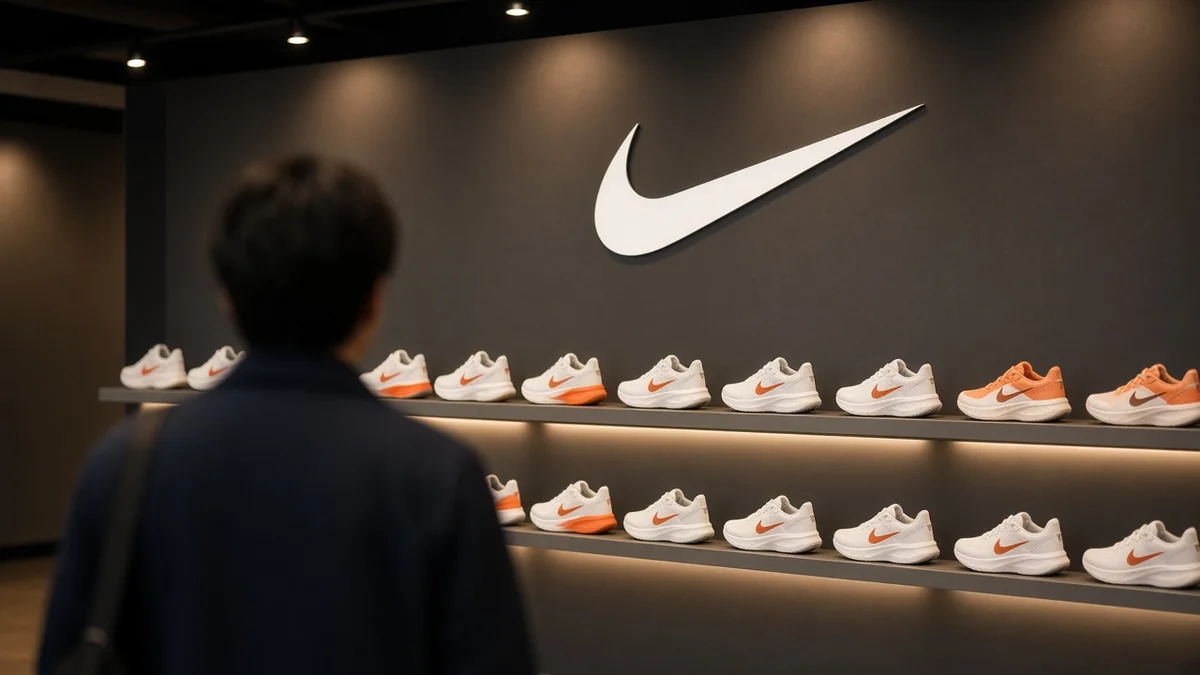
Who owns Nike? Nike is a publicly traded company owned by its shareholders, but the family of co-founder Phil Knight controls it through Swoosh, LLC, which holds 78.8% of the Class A stock that elects 8 of Nike’s 11 directors, according to Nike’s 2026 proxy statement.
The biggest outside investors are index managers. Vanguard Capital Management held 7.5% of Nike’s traded Class B shares and State Street held 5.0% as of June 30, 2026.
Put those numbers side by side and you get the real answer. Knight-linked holders own about a fifth of the company’s shares, yet they hold roughly 97% of the stock that picks the board.
Key takeaways
- Knight-linked holders own about 19.7% of Nike’s shares but roughly 97% of the Class A stock that elects 8 of 11 directors (our math from 2026 filings).
- Phil Knight holds about 2.4% of Nike in his own name and has no vote inside Swoosh, LLC. His son Travis has a significant role managing its shares.
- Vanguard (7.5%) and State Street (5.0%) are the only outside holders above 5% of Class B in the 2026 proxy.
- In April 2026, Swoosh told Nike’s board it won’t support ending the dual-class setup, and a pension-fund proposal to do so never reached a vote.
How Nike’s two share classes work
Nike has had two classes of common stock since it went public in 1980. Class B is the one you can buy: it trades on the New York Stock Exchange as NKE.
Class A isn’t listed anywhere, though holders can convert it into Class B one-for-one whenever they like. Financially, the two classes are identical. Each share gets the same dividend, the same claim on profits and one vote on most matters, from executive pay to picking the auditor.
The board is the exception. As long as Class B makes up between 25% and 87.5% of all shares, Class B holders elect a quarter of the directors (rounded up) and Class A holders elect everyone else. With 11 seats up for election in September 2026, that meant 3 for Class B and 8 for Class A.
Nike’s FY2026 annual report counted 281.4 million Class A shares and 1.20 billion Class B shares on July 8, 2026. Class A is about 19% of the company, and it had just 16 holders of record.
One mix-up worth clearing up: some explainers describe Class B as the control stock. It’s the other way around. Class B is the public float, and Class A is where control sits.
Share of all Nike shares (1.48 billion)
Knight-linked 19.7%
Vanguard 6.0%
State Street 4.0%
All other holders 70.3%
Who elects Nike’s 11 directors
Knight-linked holders own 97.3% of Class A.
Who owns Nike now? The largest shareholders in 2026
Nike’s 2026 proxy statement lists every holder with more than 5% of a share class. Because Class A converts into Class B, the SEC also counts Class A holders as Class B owners, so the filing’s percentages overlap and can’t be added up.
The last column below fixes that by dividing each stake by all 1.48 billion shares.
| Holder | Shares held | % of its class | % of all Nike shares* |
|---|---|---|---|
| Swoosh, LLC | 221.75M Class A | 78.8% of Class A | 14.9% |
| Phil Knight (own name) | 27.48M Class A + 8.34M Class B | 9.8% of Class A | 2.4% |
| Travis A. Knight 2009 Irrevocable Trust II | 24.68M Class A | 8.8% of Class A | 1.7% |
| Travis Knight (incl. Three Strings Investors) | 9.53M Class B | 0.8% of Class B | 0.6% |
| Vanguard Capital Management | 89.48M Class B | 7.5% of Class B | 6.0% |
| State Street Corporation | 59.59M Class B | 5.0% of Class B | 4.0% |
*Our calculation: holdings as of June 30, 2026 (Nike 2026 proxy) divided by 1,483.5 million shares outstanding on July 8, 2026 (Nike FY2026 Form 10-K).
Add up the four Knight lines and you get about 291.8 million shares, or 19.7% of Nike. That’s more than Vanguard and State Street combined, before voting power even enters the picture.
One name has dropped off. BlackRock, a public company with its own shareholder mix, held 7.3% of Class B in the 2025 proxy but isn’t in the 2026 table, which only shows holders above the 5% line.
Does Phil Knight still own Nike?
Yes, but less directly than most people assume. Knight started the business as Blue Ribbon Sports in 1964 with his former track coach, Bill Bowerman, and it later became Nike.
In 2015 he announced he’d step down as chairman and moved most of his Class A shares into Swoosh, LLC. He’s now chairman emeritus, with a standing invitation to board meetings as a non-voting observer.
The detail most articles skip sits in Nike’s FY2026 10-K: Knight doesn’t have voting rights over Swoosh. His son Travis, a Nike director, has a significant role in managing the Class A shares Swoosh holds.
Why his stake shows up as 2%, 17% or 20%
Each source counts something different. Using June 30, 2026 holdings and the July 8 share count, shares in Knight’s own name come to 35.8 million, or 2.4% of Nike. Add Swoosh and the total is 257.6 million, or 17.4%, close to the figure many stock-data sites show under his name. Add Travis’s trust and Travis’s own shares and the family-linked bloc reaches 19.7%.
None of those figures is wrong. They answer three different questions: what Phil Knight owns personally, what gets attributed to him, and what the family bloc holds.
Travis Knight and Swoosh, LLC
Travis Knight, 52, has been on Nike’s board since 2015 and is CEO of Laika, the stop-motion studio behind Kubo and the Two Strings. Nike doesn’t count him as an independent director because his father is paid as chairman emeritus, which trips NYSE independence rules.
He formally disclaims beneficial ownership of Swoosh’s shares, so his own line in the proxy looks modest at 9.5 million Class B shares. The 10-K’s “significant role” wording says more about his real influence.
Swoosh’s stake moves, too. It held 226.75 million Class A shares in the 2025 proxy and 221.75 million in 2026, after distributing 5 million shares to its members in December 2025, according to an SEC Form 4.
The 2026 fight over dual-class shares
In 2026, New York City’s public pension funds filed a proposal asking Nike to phase out its two-class structure within seven years.
Swoosh replied in an April 10, 2026 letter to the board. It said it would vote against any such change, wouldn’t convert its Class A shares and wouldn’t negotiate on either point.
Because changing Class A rights requires a Class A vote, Nike argued it had no power to carry out the proposal. The SEC staff said on May 12, 2026 that it wouldn’t object to Nike leaving it off the ballot.
My take: that exchange answers “who owns Nike” better than any shareholder table. Outside investors hold about 80% of the shares, but the Knights decide who sits in the boardroom, and they’ve now said in writing that they plan to keep it that way.
Who runs Nike day to day?
Owning Nike and running it are separate jobs. Elliott Hill has been president and CEO since October 2024, returning after he retired from the company in 2020. Mark Parker, CEO from 2006 to 2020, is executive chairman, and Apple’s Tim Cook is lead independent director.
Hill’s appointment followed the worst day in Nike’s history as a public company. On June 28, 2024, the stock fell about 20% and wiped out roughly $28.4 billion in market value after Nike forecast a drop in fiscal 2025 revenue, Reuters reported. In September 2024, Nike named Hill to replace John Donahoe.
In my view, that’s the structure doing its job: a board elected mostly by one family bloc can move fast when that bloc wants change. The catch is that public shareholders can’t force a change the family doesn’t want.
Which country owns Nike?
Nike is an American company. Nike, Inc. is incorporated in Oregon and headquartered in Beaverton, and its controlling shareholders are the Knight family entities described above.
The “is Nike Chinese?” question usually comes from manufacturing. In fiscal 2026, contract factories in Vietnam made about 52% of Nike Brand footwear, Indonesia 27% and China 16%, per the 10-K.
There is one odd foreign link. Sojitz Corporation of America, which Nike’s 10-K describes as a large Japanese trading company, owns all 300,000 shares of Nike’s redeemable preferred stock and has handled import-export financing for Nike since 1972.
Those preferred shares get a vote on a few big events, including a sale of the Nike trademark for athletic shoes sold in the US. A “no” lets either side redeem the shares at $1 each, so it’s a vote rather than a veto. Curious about other sneaker labels? Here’s which country Skechers comes from.
What brands does Nike own?
Nike, Inc. sells under three brands: Nike, Jordan and Converse. Jordan Brand uses the Jumpman logo and reports inside Nike’s regional segments. Converse, bought in 2003, is a wholly owned subsidiary based in Boston that reports on its own.
Michael Jordan doesn’t own Jordan Brand. Nike does, and Jordan is paid under his long-running deal with the company, whose terms aren’t public. He isn’t among the 5%-plus holders in the proxy.
Nike has also shed brands over the years, selling Bauer in 2008, Umbro in 2012, Cole Haan in 2013 and Hurley in 2019. Its 10-K names rivals from adidas and Anta to On and New Balance, and we size them up in our breakdown of Nike’s competitors.
What buying NKE shares actually gets you
Buy NKE and you get Class B shares: full economic rights, but a say over only 3 of 11 board seats. On ordinary votes such as say-on-pay, both classes vote together, so the Knight-linked bloc’s roughly 20% is a loud voice but not a majority.
You can own a slice of the Swoosh. You can’t vote the Knights out.
Other questions about Nike’s ownership
What is the current price of Nike stock?
Nike’s Class B shares trade on the New York Stock Exchange under the ticker NKE, and you can buy them through any brokerage account. The price changes every trading day, so check a live quote rather than a figure in an article. Class A shares aren’t listed and can’t be bought on the market.
Could anyone buy Nike outright?
Not without the Knights’ support. Class A holders elect 8 of 11 directors, and Nike’s articles require an 80% shareholder vote for a merger with anyone owning 10% or more, unless the board approves it first. With Swoosh’s bloc choosing most of the board, any takeover effectively needs its blessing.

Discussion