Who Owns Mountain Dew? PepsiCo, Its Bottlers and Shareholders
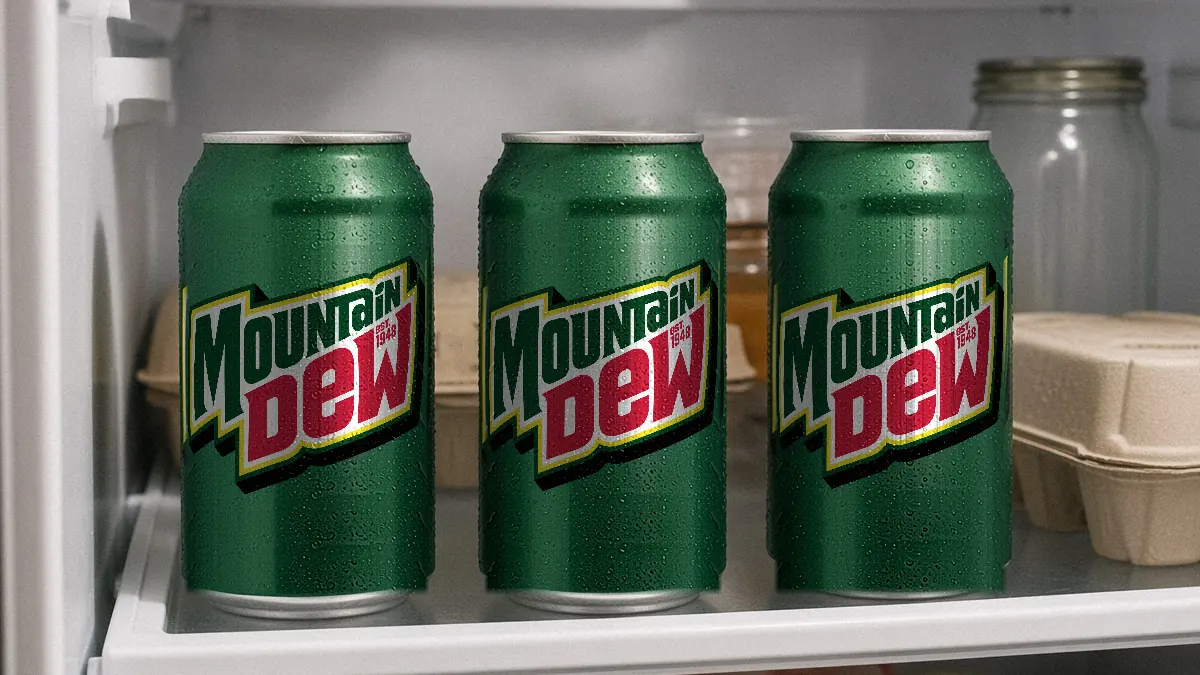
PepsiCo owns Mountain Dew. Pepsi-Cola bought the brand and its production rights from the Tip Corporation of Marion, Virginia, in August 1964, and PepsiCo, Inc. still lists Mountain Dew among the trademarks it owns in its fiscal 2025 annual report, filed in February 2026.
So it’s a Pepsi drink, not a Coke one. The fuller answer to who owns Mountain Dew has three layers: PepsiCo owns the brand and recipe, a mix of PepsiCo plants and licensed bottlers fill the bottles, and PepsiCo itself belongs to public shareholders, none of whom controls it.
Key takeaways
Is Mountain Dew owned by Coke or Pepsi?
Pepsi. Coca-Cola has never owned Mountain Dew, and it has spent decades trying to beat it with citrus rivals like Mello Yello.
The mix-up usually starts at a soda fountain. Restaurants sign with one company or the other, so a place pouring Coke won’t have Mountain Dew. Taco Bell serves Mountain Dew Baja Blast because it’s a Pepsi account.
Who owns Mountain Dew at each level?
“Owner” can mean the company holding the trademark, the company making the drink, or the people who own that company. For Mountain Dew, those are three different answers.
Public investors in PepsiCo (Nasdaq: PEP). Largest disclosed holder: Vanguard Capital Management, 7.51% (March 31, 2026).
PepsiCo, Inc. Makes the concentrate and fountain syrup and licenses the brand.
Mostly PepsiCo’s own bottling, plus some independent bottlers
Carlsberg Britvic, under a PepsiCo franchise
Varun Beverages, under a PepsiCo bottling agreement
The Mountain Dew ownership chain: shareholders own PepsiCo, PepsiCo owns the brand, bottlers make the drink under license.
PepsiCo’s 2025 Form 10-K names Mountain Dew among the trademarks it calls essential to its worldwide business. In North America, its beverage unit makes concentrates, fountain syrups and finished drinks under Mountain Dew and Diet Mountain Dew. Outside it, PepsiCo’s International Beverages Franchise unit sells Mountain Dew concentrate to bottlers, who do the mixing, filling and delivering.
That split between brand owner and manufacturer is common in consumer brands. The setup we found when looking at who owns BET follows the same idea: the name people know sits inside a much bigger parent. Other soda brands are messier still: who owns RC Cola depends on which country you’re in, and with who owns Sunkist, the trademark and the soda belong to different companies.
Who makes Mountain Dew in the US, UK and India?
The can in your hand was probably filled by a different company depending on where you bought it.
| Market | Who bottles it | Who owns the bottler |
|---|---|---|
| United States | PepsiCo Beverages North America in most areas, independent bottlers in some | PepsiCo, since buying its two largest bottlers for $7.8 billion in 2010 |
| United Kingdom | Carlsberg Britvic | Carlsberg Group, after its £3.3 billion Britvic takeover closed in January 2025 |
| India | Varun Beverages Ltd (VBL) | Listed company; Ravi Jaipuria’s promoter group holds 59.43% (September 2026 quarter) |
In the US, PepsiCo’s 2010 purchase of Pepsi Bottling Group and PepsiAmericas pulled about 80% of its North American beverage system under one roof, by the company’s own estimate at the time. That’s why most American Mountain Dew is made by PepsiCo directly.
In the UK, PepsiCo agreed in June 2024 to waive a change-of-control clause in its Britvic bottling contracts, which cleared the way for Carlsberg’s takeover. Carlsberg Britvic itself put Mountain Dew’s UK retail sales at £32.6 million, up 11.5% year on year, in figures it published in October 2026, as it began rolling out Pitch Black nationally from November.
In India, VBL and PepsiCo India signed a revised bottling and trademark licence on May 21, 2026, extending it to April 30, 2049. VBL bottles Mountain Dew alongside Pepsi, 7UP and other PepsiCo brands, but the Mountain Dew trademark stays with PepsiCo.
Who owns Pepsi?
PepsiCo is a public company traded on Nasdaq under the ticker PEP. No founding family, parent company or single investor controls it.
The largest disclosed holder is Vanguard Capital Management, which reported 102.8 million shares, or 7.51% of the stock, in a Schedule 13G filed for March 31, 2026. That stake is mostly index funds held for millions of ordinary investors, so it doesn’t mean Vanguard picks soda flavors.
The more hands-on shareholder lately has been activist fund Elliott Investment Management, which took a stake worth about $4 billion in September 2025. Its percentage hasn’t been disclosed. On December 8, 2025, PepsiCo agreed to cut nearly 20% of its US product range, lower some prices and review its North American supply chain.
Day-to-day control sits with management. Ramon Laguarta has been CEO since 2018 and chairman since 2019.
Who invented Mountain Dew, and how did Pepsi get it?
Mountain Dew changed hands twice before Pepsi bought it, and the drink you know today came from the middle owner, not the founders.
| Year | What happened |
|---|---|
| 1940 | Knoxville bottlers Barney and Ally Hartman make a lemon-lime soda to mix with whiskey. “Mountain dew” was slang for moonshine. |
| 1946 | The year most histories give for the Hartmans’ first local bottles, sold with a joke hillbilly label. No filing backs up the exact date. |
| 1948 | The Hartmans file the Mountain Dew trademark in November 1948, listing first commercial use that October. It’s the earliest documented date, and the one PepsiCo uses on its “Est. 1948” logo. |
| 1957 to 1961 | Tip Corporation of Marion, Virginia, takes over the brand. Bill Bridgforth reworks the formula in 1958, and Bill Jones launches the citrus version in 1961. |
| Aug 1964 | Pepsi-Cola buys the brand and production rights from Tip and expands distribution across the US and Canada. |
| 1969 | Pepsi drops the hillbilly campaign for a younger, outdoorsy image. |
| 2008 | The US label switches to “Mtn Dew.” |
| 2024 to 2025 | PepsiCo announces the full “Mountain Dew” name is coming back (October 2024), with the new look rolling out in 2025. |
| Oct 2026 | PepsiCo closes its Knoxville bottling plant, affecting 112 workers, in the city where the drink was born. |
The founders never sold to Pepsi directly. Tip bought the rights in 1957, and Pepsi got the brand by buying it from Tip seven years later. The price wasn’t part of the public announcements.
Is Mountain Dew a hillbilly drink?
It started as one, on purpose. The Hartmans’ label showed a rifle-carrying hillbilly, and the name itself was a moonshine joke.
Pepsi kept that backwoods branding for a few years after 1964, helped by the popularity of The Beverly Hillbillies, then dropped it in 1969. Since then the brand has leaned on extreme sports and gaming. PepsiCo still nods to the roots now and then, as with the 2015 craft soda Dewshine.
Why was Mountain Dew banned in some countries?
The drink wasn’t banned. One ingredient was. The older US formula used brominated vegetable oil (BVO), which isn’t allowed in Europe or Japan, and that’s where the “banned” headlines come from.
PepsiCo took BVO out of Mountain Dew by 2020. The US Food and Drug Administration then revoked BVO’s authorization on July 2, 2024, effective August 2, 2024, with full compliance required by August 2, 2025.
How much does Mountain Dew make for PepsiCo?
PepsiCo doesn’t publish brand-level revenue, so any exact Mountain Dew sales figure you see online is an estimate.
Here’s what is disclosed. PepsiCo Beverages North America reported $28.2 billion in 2025 net revenue, out of $93.9 billion for the whole company. That works out to about 30% of PepsiCo’s sales, shared across Pepsi, Gatorade, Mountain Dew and the rest of the North American drinks lineup.
Mountain Dew’s weight inside that unit is old but telling. It held 6.6% of the US carbonated soft drink market in 2017, and in 2010 it made up 80% of US citrus soda sales. Recent trends are softer: PBNA’s unit volume fell 3% in 2025.
Could PepsiCo sell Mountain Dew?
Selling the brand would be a surprise. It’s one of PepsiCo’s core trademarks and a big reason restaurant chains sign Pepsi fountain deals.
The bottling side is a different story. Elliott has pushed PepsiCo to hand US bottling back to franchise partners, and the company has promised investors a supply chain update in late 2026. On the October 8, 2026 earnings call, Laguarta said PepsiCo is “open to revisiting every option.”
My take: if anything changes, it’ll be who fills American Mountain Dew cans, not who owns the name. That would look a lot like the pre-2010 setup, and like the UK and India today, where PepsiCo keeps the brand and someone else runs the trucks.
FAQ
Who owns Mountain Dew Baja Blast?
PepsiCo owns the Baja Blast flavor and name, since it’s part of the Mountain Dew trademark family. Taco Bell, owned by Yum! Brands, sells it through a long-running beverage partnership with PepsiCo. Baja Blast has also appeared in stores for limited periods, but Taco Bell remains its main home.
Is it called Mtn Dew or Mountain Dew now?
Mountain Dew. The US label used “Mtn Dew” from 2008, and the word “mountain” had been off the label since 2009. PepsiCo announced the full name’s return in October 2024, along with a new logo and imagery, and the refreshed packaging rolled out during 2025.
Discussion