Posts#thriftyevents.net: What the Site Publishes
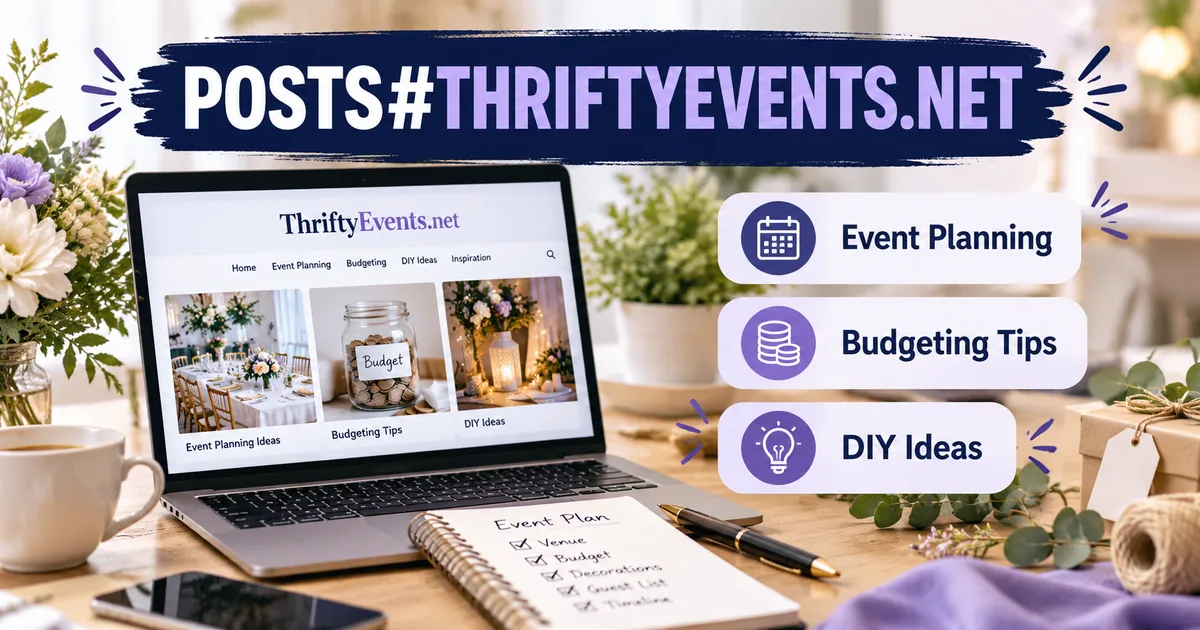
Posts#thriftyevents.net is best understood as a search phrase connected with content published on ThriftyEvents.net. The site mainly presents budget event-planning articles, budgeting tips, DIY ideas, venue guidance, and practical planning advice. Readers should treat broader claims about listings, payments, or contributor tools cautiously unless those features are clearly available on the live site.
Quick Facts About ThriftyEvents.net
The public-facing site gives a clear picture of its editorial focus, but several company-level details are not openly stated. The table below separates visible information from details that are not publicly disclosed.
| Field | Detail |
| Site Name | ThriftyEvents.net |
| Primary Focus | Budget-conscious event planning |
| Main Content Areas | Event Planning, Budgeting Tips, DIY Ideas |
| Typical Reader Need | Planning an event while controlling costs |
| Content Format | Blog posts, guides, checklists, tips, and idea-based articles |
| Ownership | Not publicly disclosed on the main pages reviewed |
| Revenue | Not publicly disclosed |
| Leadership | Not publicly disclosed |
| Current Site Style | Informational blog with topic categories |
| Main Use | Finding practical ideas for planning and budgeting |
Source: ThriftyEvents.net homepage and current site pages reviewed in October 2026.
What is posts#thriftyevents.net?
The phrase posts#thriftyevents.net appears to refer to posts associated with ThriftyEvents.net rather than a clearly identified standalone product. Search results use several similar versions of the phrase, which can make the intent look more complicated than it is.
The safest interpretation is simple. A reader searching posts#thriftyevents.net is probably trying to understand what the site publishes, what kinds of event-planning topics it covers, or whether a specific feature described in another page actually belongs to the site.
Some indexed pages describe features beyond the visible blog structure, including listings, filters, organizer profiles, payment links, and publishing workflows. Readers should not assume those functions exist across the site simply because one indexed article mentions them.
The main site is easier to describe: it centers on articles about planning events with limited budgets.
What topics does ThriftyEvents.net cover?
ThriftyEvents.net focuses on budget-oriented event planning. Its visible categories and article themes repeatedly return to three broad areas: planning, budgeting, and DIY ideas.
Event planning posts on ThriftyEvents.net
Event-planning articles are useful when a reader needs help turning an idea into a workable plan. The topic can include choosing a venue, building a timeline, setting priorities, tracking tasks, coordinating suppliers, and preparing for the event day.
For posts#thriftyevents.net, this type of content is more useful when it helps a reader make a decision rather than simply describing an event. A good planning article should make the next step obvious.
Venue advice is more useful when it explains what to compare before booking, while checklists work best when tasks follow the order in which planning actually happens.
Budgeting tips
Budgeting content is a natural part of the site because event costs can change quickly depending on scale and choices. Guest count, venue, time of year, and other planning decisions can materially change the total cost, according to CNBC.
That does not mean every reader needs the same budget formula. A small family gathering and a corporate event can have very different spending priorities. The useful part of budgeting content is the method: set a limit, identify fixed and flexible costs, compare alternatives, and update the numbers as decisions become final.
Readers should also avoid treating a price in an older article as a guaranteed current rate. Venue fees, supplier quotes, catering costs, transport charges, and material prices can change. The practical response is to use the article as a starting point, then confirm current costs before paying.
DIY event ideas
DIY content can reduce reliance on outside suppliers for certain tasks, but it still has a cost. Materials, tools, preparation time, transport, storage, and setup effort all matter.
A DIY decoration idea may look inexpensive until material costs and assembly time are included. The best use of DIY advice is to compare effort with savings before deciding whether to make or buy.
What kinds of posts can readers expect?
Readers can expect posts#thriftyevents.net content to be organized around practical event-planning problems rather than one narrow subject. The table below shows the main content types and the checks readers should make before acting on them.
| Content Type | What It Can Help With | What Readers Should Check |
| Event-planning guides | Timelines, task order, venue choices, preparation | Current venue rules, availability, and booking terms |
| Budgeting posts | Spending limits, priorities, cost comparisons | Current prices and supplier quotes |
| DIY ideas | Decorations, gifts, setup, and hands-on projects | Material cost, time, tools, and difficulty |
| Lists and roundups | Comparing multiple ideas quickly | Whether links, dates, and recommendations are current |
| Checklists | Keeping tasks in sequence | Whether the list fits the event type and scale |
| Venue-related posts | Comparing spaces and planning needs | Capacity, restrictions, fees, and availability |
Source: ThriftyEvents.net homepage, blog categories, and indexed event-planning pages reviewed in October 2026.
This mix explains why the keyword can lead to different-looking pages, even though the common theme remains budget-conscious event planning.
How can you use posts on ThriftyEvents.net?
The most practical way to use posts#thriftyevents.net is to begin with the decision you need to make. Searching by the problem is usually more useful than reading random articles.
If you are choosing a venue, look for venue-related guidance. If you are trying to reduce costs, focus on budgeting and DIY topics. If you already have a date and location, planning checklists may be more helpful than broad idea posts.
Start with a firm spending limit
Before comparing decorations, food, or suppliers, decide what you can spend. Setting a spending limit and tracking costs are sensible early steps, according to The Guardian.
A fixed limit gives context to later choices. Once it is clear, divide spending into categories that fit the event rather than copying another person’s budget.
Match advice to your event
A useful post should fit the scale and purpose of the event. Advice for a large wedding may not translate well to a small birthday gathering. Corporate events can also have requirements that personal celebrations do not.
Look at the assumptions behind the advice. How many people is it intended for. Does it assume access to a kitchen, outdoor space, volunteers, or specific equipment. Does it depend on a local supplier or seasonal availability.
That check turns general reading into practical planning.
Verify changing details
Some information ages faster than other information. A planning sequence can stay useful for years, while a price or booking rule can become outdated quickly.
Check dates, prices, venue restrictions, supplier terms, cancellation conditions, and availability before committing money. This is especially relevant when posts#thriftyevents.net content refers to external services or event opportunities.
Does posts#thriftyevents.net include event listings?
Some indexed pages use posts#thriftyevents.net as though it refers to an event-listing system. They describe filters, location searches, organizer information, payments, and post-submission features.
Those descriptions should be treated separately from the visible structure of the main site. The main homepage is organized around informational content and blog categories, so it is safer to describe ThriftyEvents.net as an event-planning content site unless a live feature can be directly confirmed.
If a reader specifically wants event listings, ticket purchases, organizer verification, or a posting dashboard, that feature should be checked directly before relying on it.
Can writers publish posts on ThriftyEvents.net?
Some pages connected with posts#thriftyevents.net discuss writing content, headlines, SEO, visuals, calls to action, and article structure. That does not automatically confirm that the site currently accepts public guest submissions.
Writers should first check whether there is an active contributor page, submission form, editorial contact, or published set of guidelines. If those are not visible, older or third-party instructions should not be treated as current policy.
Requirements such as word count, image dimensions, link rules, topic approval, or payment can change. Until the site confirms them, treat publishing advice as general guidance rather than official policy.
How should readers evaluate ThriftyEvents.net posts?
Readers should separate stable planning ideas from claims that need current verification. The more specific a claim is, the more important that check becomes.
General advice about creating a budget, comparing venues, or preparing a checklist is easy to adapt. Exact prices, discounts, dates, deadlines, supplier availability, and descriptions of website features are more time-sensitive.
The same rule applies to savings claims. If an article gives a precise amount or percentage, readers should look for the basis of that figure before repeating it. Clear limits make posts#thriftyevents.net more useful as a research starting point.
What makes a useful budget event-planning post?
A useful event-planning post answers one clear question, gives realistic next steps, and makes it easy to see what information needs to be checked.
It should also separate lasting advice from changing facts. A venue checklist can stay useful, while actual prices should be treated as current only when checked recently.
Good posts explain trade-offs. Cutting a supplier can save money but create extra work, while DIY can reduce spending but increase preparation time. For posts#thriftyevents.net, practical advice and modest claims are the strongest editorial direction.
How is ThriftyEvents.net different from an event-listing site?
ThriftyEvents.net currently looks more like an informational event-planning blog than a conventional event-listing marketplace. Its main navigation and homepage emphasize articles, categories, tips, and planning ideas.
An event-listing site usually centers on finding individual events, checking dates and locations, viewing organizer details, and registering or buying a ticket. A blog helps someone plan, while a listing platform helps someone discover or attend an event. Judge the site by the functions actually visible on the live page.
Conclusion
posts#thriftyevents.net mainly refers to content connected with ThriftyEvents.net. The site visibly focuses on budget event planning, budgeting, DIY ideas, and practical guidance. Broader claims about listings, payments, or contributor systems should be confirmed directly before readers rely on them.
FAQ
What does posts#thriftyevents.net mean?
posts#thriftyevents.net most likely refers to posts or content associated with ThriftyEvents.net. The visible site is mainly organized around event-planning articles and topic categories rather than a standalone product with that exact name.
What type of content does ThriftyEvents.net publish?
The site focuses on budget event planning, budgeting tips, DIY ideas, venue-related guidance, checklists, and practical preparation. The exact mix can change as new posts are added.
Is ThriftyEvents.net an event-listing website?
The main site currently appears primarily as an informational blog. Some indexed pages describe listing-style functions, but readers should confirm those features on the live site before relying on them.
Can writers submit posts to ThriftyEvents.net?
A public submission process is not obvious from the main pages reviewed. Writers should check for current contributor instructions or a submission contact before assuming outside articles are accepted.
Are posts#thriftyevents.net articles only about cheap events?
No. The focus is broader budget-conscious event planning. Topics include planning methods, spending choices, DIY work, venues, checklists, and practical ways to organize events while controlling costs.


Discussion