Music Startups in 2026: Where the Money Is (and Where It Isn’t)
Music startups in 2026: AI tools like Suno and artist infrastructure like DistroKid are pulling in the big money. See which models work and which don't.
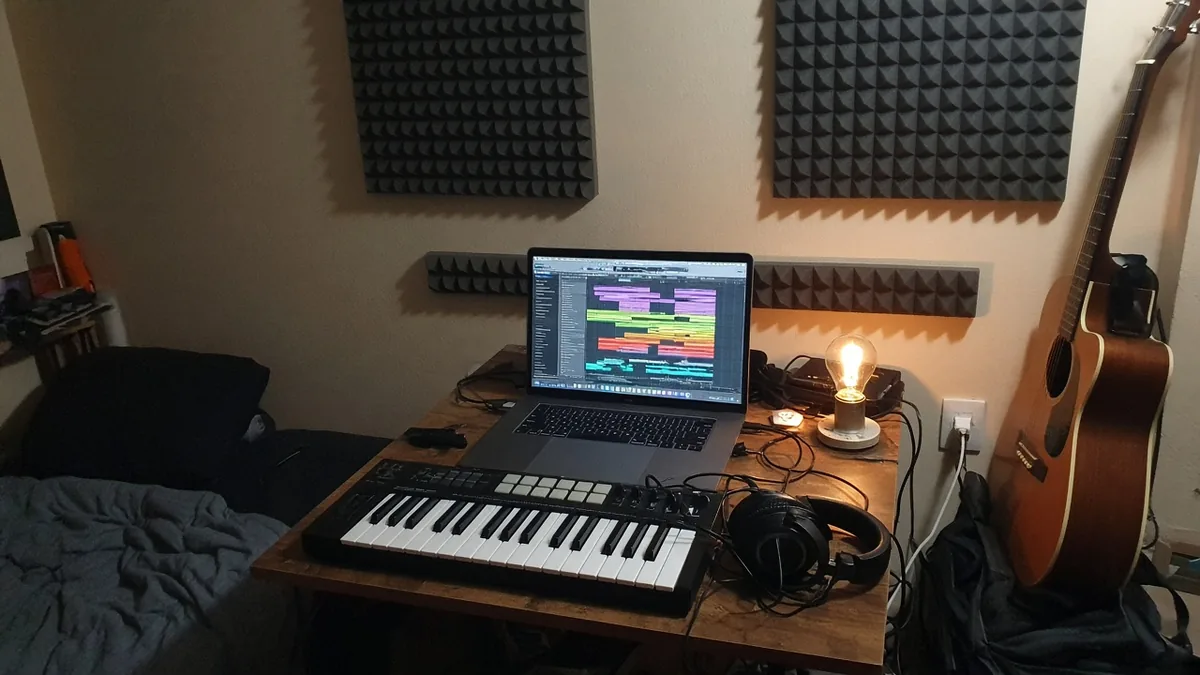
A music startup is a young company that makes money by helping people create, distribute, license or listen to music. In 2026 the big money is going to AI creation tools and artist infrastructure. Suno raised more than $400 million at a $5.4 billion valuation in June, and private equity firm CVC agreed in July to buy a majority stake in DistroKid.
New streaming apps, by contrast, barely get funded. One number explains why, and we’ll get to it.
Looking for the soundtrack to the K-drama Start-Up? You’ll find it on Spotify or YouTube.
Key takeaways
- Suno’s $5.4 billion valuation is about 18 times the $300 million in annual recurring revenue its CEO reported in February 2026.
- Spotify says it pays nearly 70% of what it takes in to the music industry. A new streaming service would keep roughly $3 of every $10 subscription.
- Selling tools to musicians avoids most licensing costs. DistroKid launched in 2013 without outside money and was valued at $1.3 billion by 2021.
- AI music startups now settle with labels before they scale. Warner settled with Suno, and Universal and Warner with Udio, in late 2025.
What kinds of music startups get built?
Most music startups fall into five groups. What separates them is how much of each dollar they owe rights holders before paying a single employee.
If you want the general theory first, here’s how the main types of business models work.
| Category | How it makes money | Example | Licensing exposure |
|---|---|---|---|
| AI music generation | Paid subscriptions, label licensing deals | Suno, Udio | High. Both were sued by major labels in 2024 |
| Distribution and artist services | Flat yearly fees or a cut of royalties | DistroKid | Low. Artists upload music they own |
| Creator software and samples | Software and sample subscriptions | Splice, BandLab | Low to medium. Samples must be cleared up front |
| Streaming and listening | Subscriptions and ads | Spotify | Very high. Nearly 70% of revenue paid out |
| Live and fan discovery | Ticketing partnerships, memberships | Songkick (bought by Suno in 2025) | Medium |
Why almost nobody funds a new streaming startup
Spotify says it pays nearly 70% of the money it takes in to labels, publishers and artists. In 2025 that came to more than $11 billion, according to Spotify’s January 2026 payout update.
Where a $10 streaming subscription goes
Now run that split on a startup. Sign up 100,000 subscribers at $10 a month and you bring in $12 million a year. About $8.4 million goes straight back out to rights holders, leaving $3.6 million for payment fees, servers, staff and marketing.
A newcomer also won’t get Spotify’s terms, and labels can ask new services for money up front. Even Spotify, founded in 2006, didn’t post a full-year profit until 2024. That’s the wall every streaming pitch hits.
Where music startup funding went in 2025 and 2026
Suno: AI music priced like software
Suno lets anyone generate a full song from a text prompt. It raised a $250 million Series C at a $2.45 billion valuation in November 2025, then more than $400 million at $5.4 billion in June 2026, according to Suno’s Series D announcement. Bond Capital led the round.
In February 2026, CEO Mikey Shulman said Suno had 2 million paid subscribers and $300 million in annual recurring revenue. Divide the valuation by that and investors paid about 18 times recurring revenue. That revenue figure is self-reported, not audited.
The legal side moved just as fast. The three major labels sued Suno in 2024. Warner settled in November 2025, signed a licensing partnership and sold Suno the concert app Songkick, while Universal and Sony were still pursuing their cases in the latest reports.
Udio: settle first, then pivot
Udio, Suno’s closest rival, settled with Universal in October 2025 and with Warner shortly after. It agreed to build licensed models for a new platform due in 2026.
The cost of peace showed up right away. Udio switched off downloads, turning an open creation tool into a closed one. Sony had not settled as of the latest reporting.
DistroKid: the self-funded exit
DistroKid took the opposite route. Founder Philip Kaplan launched it in 2013 without outside money, charging artists a flat yearly fee to get songs onto streaming services instead of taking a cut of their royalties.
Insight Partners’ 2021 investment valued it at $1.3 billion. In July 2026, CVC agreed to buy a majority stake. Terms weren’t disclosed, though Music Business Worldwide had reported in January that DistroKid was seeking around $2 billion.
Our read: money is chasing companies that own the creation layer or the pipes, and it rewards founders who turn legal risk into a contract early. A pure listening app sits in the worst spot, with all the licensing cost and none of the pricing power.
How to start a music startup
- Decide which side of the royalty line you’re on. If your product plays other people’s recordings, you need licenses from labels and publishers before launch. If you sell tools to people making music, you mostly don’t.
- Price around the fee everyone resents. DistroKid grew by charging a flat fee where rivals took a percentage. Find the equivalent in your niche.
- Budget for lawyers early if you touch training data. Suno and Udio both spent 2025 settling suits filed in 2024. If you build AI music tools, license first.
- Match the funding path to the model. A subscription tool can grow on revenue, the way DistroKid did; here’s how bootstrapping compares with fundraising. Training music models takes late-stage venture money, the kind raised in rounds like a Series C.
- Sell to the working middle of music. Spotify says more than 13,800 artists earned at least $100,000 from it alone in 2025, and its 100,000th-highest earner made over $7,300. That’s a big group with real budgets for software, samples and promotion.
The short version: build something musicians pay for, or something labels sign off on. Anything in between is a lawsuit waiting for a growth chart.
FAQ
Are music startups profitable?
Few disclose profits. Spotify, the sector’s biggest success, reported its first full-year profit for 2024, about 18 years after it was founded. Tool businesses tend to get there sooner because they don’t hand most revenue to rights holders, though private companies rarely publish audited numbers to prove it.
What is the most valuable music startup right now?
By disclosed private valuation, Suno leads at $5.4 billion after its June 2026 Series D. Spotify is far bigger, but it has been a public company since 2018, so it no longer counts as a startup. DistroKid’s July 2026 deal terms weren’t disclosed.
Do I need a license to start a music app?
If your app streams or plays recordings, yes. You need rights to the recording, usually from labels or distributors, and to the song itself, from publishers or collecting societies. Tools that help musicians make or distribute their own work usually don’t, but samples and AI training data still need clearance. Talk to a music lawyer before launch.



Discussion