How Does Shazam Make Money? Barely, and Apple Is Fine With That
How does Shazam make money? Barely. Apple keeps it free and ad-free to steer users to Apple Music and feed its discovery data. Here's how the app pays off.
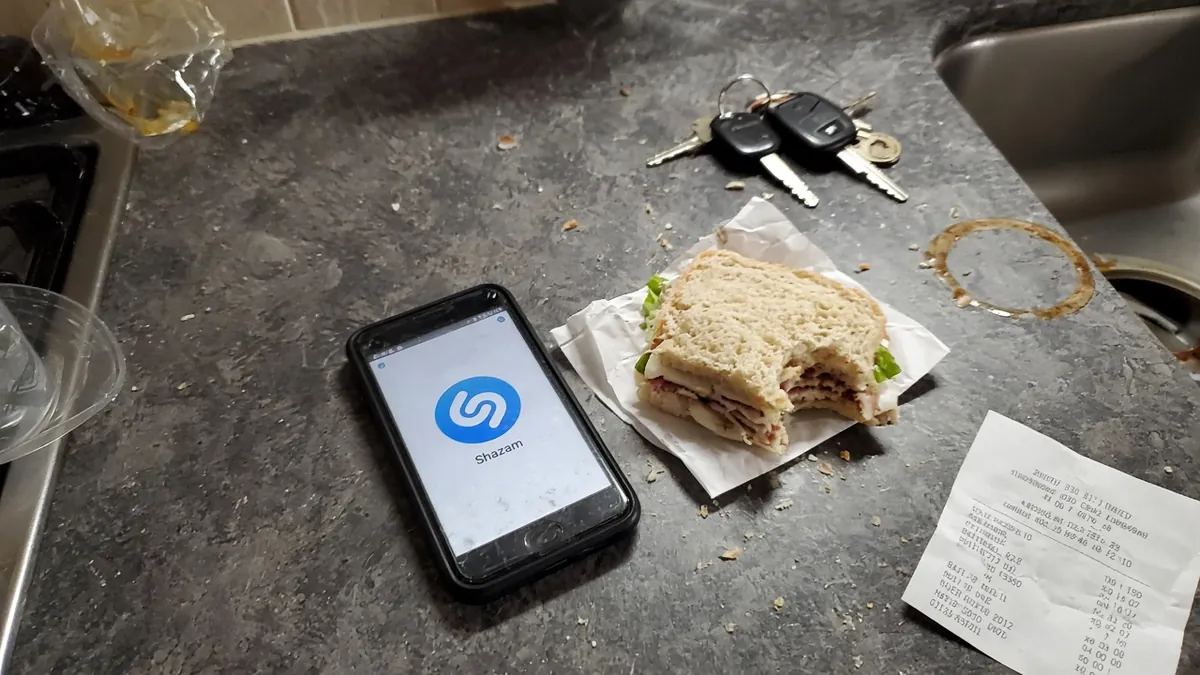
Shazam makes almost no money directly. Since Apple bought it for a reported $400 million in 2018, the app has been free and ad-free, and its job is to steer people toward Apple Music and feed Apple’s music-discovery tools. Apple doesn’t report Shazam’s revenue, so any figure for its income today is an estimate.
Before Apple, Shazam did try to make money on its own, with ads, referral fees and brand deals. Its UK filings show it never made a reliable operating profit.
Key takeaways
- Shazam’s last standalone accounts, for 2018, show £31.4 million in revenue and a £13.8 million operating loss.
- Apple removed ads after closing the deal in September 2018. Shazam now earns indirectly, through Apple Music sign-ups and discovery data.
- Even at its 2017 revenue of about £40.8 million, Shazam would equal roughly 0.05% of Apple’s $109.16 billion in fiscal 2025 services revenue (our calculation).
- Shazam passed 100 billion song recognitions in November 2024.
How Shazam makes money for Apple today
Think of Shazam as a customer acquisition tool. The app itself charges nothing; the money shows up in Apple’s other businesses.
Apple Music sign-ups
Identify a song on an iPhone and Shazam offers to open it in Apple Music. Apple has repeatedly used the app to hand out extended Apple Music trials, from two months to as many as six for new subscribers, longer than its standard offer.
Every trial that converts becomes a monthly subscription inside Apple’s services business, which brought in $109.16 billion in fiscal 2025. Apple has never said how many subscribers arrive through Shazam, so the size of this funnel is unknown.
Discovery data
Every lookup signals what people want to hear, often before a song charts. Apple turned that into the Shazam Discovery Top 50 chart in 2018 and built Shazam data into Apple Music for Artists, the dashboard musicians use to track their audience. That early-warning value is one reason Sony Music, Universal Music and Warner’s owner, Access Industries, had invested in Shazam before Apple came along.
Keeping people inside Apple’s ecosystem
Apple has built Shazam into iOS and HomePod, so song recognition works without opening the app. Small conveniences like that are part of why iPhone owners stay put. After the deal, Apple also stripped nearly all third-party tracking SDKs out of the app, which fits the privacy stance in Apple’s core values.
What Apple discloses, and what it doesn’t
Apple reports services as a single line and never breaks out Shazam. So the honest answer to “how much does Shazam make now?” is that nobody outside Apple knows.
How did Shazam make money before Apple?
Shazam began in the UK as a phone service called 2580, named after the number you dialed. As a smartphone app, it leaned on four sources of cash:
- Advertising. The free app carried display and video ads.
- Referral fees. Shazam sent listeners to services like Spotify and Apple Music, which paid it when those clicks turned into purchases or sign-ups.
- Brand campaigns. Shazam could recognize TV ads and visual fragments, and brands used that to link commercials and print pages to offers.
- Investor money. It raised $143.5 million from backers including Kleiner Perkins, DN Capital, IVP and all three major record label groups.
The numbers show a business that grew its audience faster than its revenue.
| Period | Revenue | Result | Annual active users |
|---|---|---|---|
| FY2016 | £40.3m | £4m pre-tax loss | About 300m |
| 2017 | £40.84m | £17.82m operating loss | 400m |
| 2018 | £31.42m | £13.81m operating loss | 478m |
Sources: TechCrunch (FY2016) and Shazam Entertainment Ltd’s Companies House accounts as reported by Music Business Worldwide and Digital Music News (2017, 2018).
Our calculation: in 2017, Shazam earned roughly 10p per annual active user. By 2018, with ads switched off for part of the year, that fell to about 6.6p. A free utility people open for ten seconds is a hard thing to monetize, however much they love it.
Engagement was flatter than the user count suggests, too. Daily song requests sat at about 20 million in both 2014 and 2015, according to figures obtained by MusicAlly, and Apple cited the same 20 million a day in 2018. More people were installing Shazam; the ones who had it weren’t using it more.
Is Shazam profitable?
Not as a standalone business, based on everything published. Its last accounts show operating losses in both 2017 and 2018.
Shazam did report a net profit of about £124 million for 2018, which confuses a lot of people. That came from roughly £157 million booked on the sale of its intellectual property to Apple, an accounting gain from the takeover, not money earned from users.
Under Apple, Shazam’s profit isn’t reported anywhere. My take: Apple treats it as a marketing cost, and a cheap one.
How much did Apple pay for Shazam?
About $400 million, according to widely cited reports; Apple never confirmed a figure. The deal was agreed in December 2017, as TechCrunch reported at the time, and the European Commission cleared it in September 2018 after investigating whether it would harm competition in music streaming.
Our math: $400 million was about 7.6 times Shazam’s 2017 revenue (roughly $53 million at 2017 exchange rates) and about 2.8 times the $143.5 million investors had put in.
Is Shazam still owned by Apple?
Yes. Apple owns Shazam outright, and the app is still free on iPhone and Android. Usage has kept climbing: Apple said in 2022 that Shazam had more than 225 million monthly users, and in November 2024 it passed 100 billion song recognitions. For the bigger picture on its parent, see who owns Apple.
Is Shazam run by AI?
Not in the chatbot sense. Shazam’s core is audio fingerprinting, built on an algorithm developed by co-founder Avery Wang. The app turns a few seconds of sound into a spectrogram, picks out the strongest frequency peaks, converts their pattern into compact codes called hashes and matches them against a database of known recordings.
It’s fast pattern-matching rather than generative AI, which is why it can pick out a track in a noisy bar within seconds.
Why Apple is happy with an app that doesn’t pay
Here’s the scale problem in one number. Even if Apple switched the ads back on and Shazam earned its full 2017 revenue again, that would be about 0.05% of Apple’s fiscal 2025 services revenue. It would barely register, and it would annoy hundreds of millions of users.
The value sits elsewhere. One Apple Music subscriber who started with a Shazam trial is worth more over a few years than thousands of banner impressions, and every lookup sharpens Apple’s sense of what’s about to break.
Free services usually pay their way by selling your attention to advertisers, the way Pluto TV makes money. Shazam runs that logic in reverse. It uses a free tool to sell you Apple’s subscription, and on Apple’s books that beats any ad it could show you.

Discussion