How Does Roblox Make Money? Robux, the Creator Cut and Where Each Dollar Goes
How does Roblox make money? Roblox makes money almost entirely by selling Robux.
Roblox makes money by selling Robux, its virtual currency. In its quarterly filing for the period ended September 30, 2026, Roblox says substantially all of its bookings come from sales of virtual currency, with only an insignificant amount from advertising and licensing.
Players spend those Robux on games and avatar items built by outside creators. Roblox keeps a cut of each sale, pays the rest to creators, and lets eligible creators swap their earned Robux for cash.
The latest numbers, from Roblox’s third-quarter 2026 results published October 29, 2026: revenue of $1.572 billion, up 16% from a year earlier; bookings of $1.697 billion, down 12%; and a net loss of $230 million.
Key takeaways
How Roblox makes money: the Robux loop
Almost every dollar Roblox earns travels the same path.
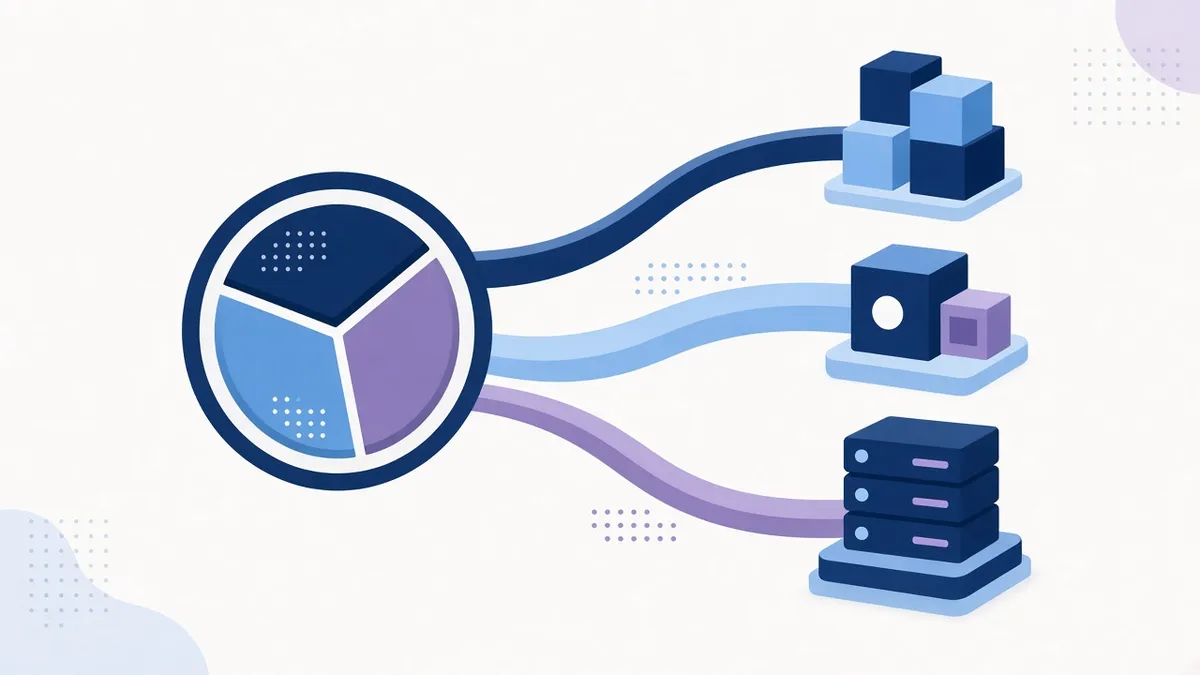
- A player buys Robux. Roblox’s filings count one-time purchases, monthly subscriptions and prepaid cards, bought through app stores, the web or other payment processors.
- The player spends Robux. On game passes, in-game items, paid access to games, or avatar clothing and accessories.
- Roblox splits the sale. Creators get credited “earned Robux,” and Roblox keeps its share.
- Creators cash out. Through the Developer Exchange (DevEx), creators 13 or older with at least 30,000 earned Robux can convert them at the standard DevEx rate of 10,000 earned Robux to $38 (the same as $114 per 30,000), per Roblox’s creator hub in November 2026. That is the current standard rate, not the only one: earned Robux from before 5 September 2025 cash out at the prior rate, and from 8 June 2026 a 42% higher DevEx rate applies to eligible in-game spend by age-checked US users 18 or older.
App stores take their own fee on step one, which shows up in Roblox’s cost of revenue. That’s why Roblox has been steering buyers elsewhere. Its 2025 annual report describes “differential Robux pricing,” launched in November 2024, which gives more Robux to people who pay through cheaper channels such as the web.
Revenue vs bookings: why one rose while the other fell
This trips up a lot of readers. Roblox doesn’t count Robux as revenue the day you buy them.
Most purchases are deferred and recognised over the estimated life of a paying user, which Roblox put at 27 months as of September 30, 2026. Bookings, by contrast, measure sales when they happen.
So in Q3 2026, revenue rose 16% because it still reflected huge 2025 sales, while bookings fell 12% because current spending had cooled. At September 30, 2026, Roblox carried $7.04 billion of deferred revenue on its balance sheet, money already collected but not yet counted as revenue.
| Metric | Full year 2025 | Q3 2026 |
|---|---|---|
| Revenue | $4.9 billion (+36%) | $1.572 billion (+16%) |
| Bookings | $6.8 billion (+55%) | $1.697 billion (−12%) |
| Developer exchange fees | $1.503 billion | $403 million |
| Net loss | $1.072 billion | $230 million |
| Average daily active users | 144 million (Q4 2025) | 138 million (−9%) |
Sources: Roblox Q4 2025 shareholder letter (February 2026), 2025 Form 10-K, Q3 2026 Form 10-Q and shareholder letter (October 29, 2026).
Does Roblox take 30% or 40%?
Both numbers are real. Which one applies depends on what’s being sold and where, according to Roblox’s creator documentation as of November 2026.
In-game sales: when a player buys a game pass or developer product, the creator gets 70% of the Robux and Roblox keeps 30% as its Marketplace fee.
Avatar items: the split is three ways. The item’s creator gets 30%, the “seller” gets 40%, and Roblox takes a 30% fee. When the item sells in Roblox’s own Avatar Marketplace, Roblox is the seller, so it keeps 70%. When it sells inside a creator’s game, that game’s owner collects the 40%.
Real-money sales: for things sold in local currency, paid access is not a 90% split. Roblox’s official paid-access table pays the creator 50% at $9.99, 60% at $29.99, and 70% at $49.99, minus taxes and VAT. Models and plugins on the Creator Store return 100% of net proceeds to the creator.
There’s a second step people miss. A creator’s 70% is paid in Robux, and turning it into dollars runs through DevEx at the fixed rate above. So “70%” describes the Robux split, not the share of a player’s dollar that reaches a creator’s bank account.
At the company level, the dollar share is easier to measure. Roblox’s DevEx fees were $1.503 billion against $6.8 billion of bookings in 2025, about 22%. In Q3 2026, $403 million against $1.697 billion was about 24%. That’s our calculation from the filings, and it isn’t exact because payouts and bookings don’t land in the same period.
Where each dollar of Roblox revenue went in Q3 2026
Here’s every operating cost from Roblox’s Q3 2026 income statement, expressed per dollar of revenue. Revenue was $1.572 billion; total costs were $1.855 billion.
Calculation by MaiaLafortezza.com from Roblox’s Form 10-Q for the quarter ended September 30, 2026. Figures rounded.
Creator payouts are the single biggest named line after R&D, at about 26 cents of every revenue dollar. Cost of revenue, mostly app store and payment fees, takes another 20 cents.
One caveat matters a lot. Revenue and cost of revenue are spread over 27 months, while DevEx fees and staff costs are booked when they happen. Comparing them in one quarter mixes old sales with current spending, which is part of why the bottom bar is red.
Other ways Roblox makes money
The non-Robux streams are small today, and Roblox says so in its own filings.
Advertising. Brands can place video ads, image billboards and “portal” ads that teleport players into an advertiser’s game. Creators who host the ads get a share based on views, impressions and teleports, according to Roblox’s creator docs. The 10-Q lists growing the ad business as a goal, but ad bookings are still an “insignificant amount.”
Licensing. Roblox-branded toys and merchandise fall here, and Roblox reports them in the same insignificant bucket as ads.
Commerce. Since Roblox’s May 2025 commerce and Shopify announcement, Roblox Commerce APIs have let creators and brands sell physical products inside games, with Shopify as the first integrated partner.
Subscriptions. Roblox Premium and the newer Roblox Plus both appear in Roblox’s creator docs. Subscription money is counted with virtual currency sales, not as a separate stream.
The playbook of a free game paid for by small in-game purchases isn’t unique to Roblox. We broke down a similar model in how Royal Kingdom makes money. The big difference is that Roblox doesn’t make most of its own content; it takes a cut of other people’s.
Does Roblox make any profit?
Not on a GAAP basis. Roblox reported a net loss of $1.072 billion for 2025 and $663 million for the first nine months of 2026, and its accumulated deficit reached $5.7 billion at September 30, 2026. For Q4 2026, it guided to a further consolidated net loss of $363 million to $423 million, excluding loss-contingency accruals, in its 29 October 2026 shareholder letter.
Cash tells a different story. Roblox generated $1.342 billion in operating cash flow in the first nine months of 2026, more than double its net loss for the period.
Two things explain the gap. First, the 27-month deferral means cash arrives well before revenue is recognised. Second, stock-based compensation, a real cost to shareholders but not a cash cost, totalled $855 million in the first nine months of 2026, per the Q3 2026 Form 10-Q.
My take: Roblox is cash-generative but not profitable, and the difference is mostly accounting timing plus heavy stock pay. Whether it ever posts a GAAP profit depends on bookings growth outrunning creator payouts and infrastructure spending. With bookings now falling year on year, that isn’t happening yet.
Where Roblox’s money comes from
The US and Canada still pay most of the bills: 57% of Q3 2026 revenue, down from 61% a year earlier, per the 10-Q. Europe was 21%, Asia-Pacific 12% and the rest of the world 10%. The US alone was 54%.
That shift toward international players matters because Roblox’s regional pricing tools charge less in lower-income markets. More users from those regions can mean more players but lower spending per head. For wider context on where the gaming money is, see our video game statistics roundup.
Is Roblox CEO a billionaire?
This article covers Roblox the company, not anyone’s personal wealth. The CEO’s share ownership is disclosed in Roblox’s proxy statement, and Roblox does not publish a personal net-worth figure for him.
How much is $100 in Roblox money?
It depends on the Robux pack and how you pay. Roblox uses differential pricing, and app stores charge different fees, so the same $100 can buy different amounts of Robux on the web, with a gift card or inside a mobile app.
Don’t confuse that with the DevEx rate. The standard $38 per 10,000 earned Robux is what creators get when they cash out, not what players pay to buy Robux.
What could change how Roblox makes money
The model itself is stable. What’s moving is the volume running through it and how much of it creators keep.
On volume, 2026 has been a step down from a record 2025. Average daily active users fell 9% year on year to 138 million in Q3, and Roblox guided to Q4 bookings of $1.89 billion to $2.0 billion, a 10% to 15% drop, in its October 29, 2026 shareholder letter.
On the split, Roblox keeps handing more to creators. Its 10-Q notes an 8.5% increase in the DevEx rate from September 5, 2025, the launch of Creator Rewards on 24 July 2025, and a 42% higher DevEx rate from 8 June 2026 for eligible in-game spending by age-checked US users 18 and older.
Each of those raises creator earnings and, all else equal, lowers Roblox’s share. Roblox is betting that better-paid creators build better games, and that better games bring in enough new spending to make up the difference. If you want to compare that bet with a company that keeps almost all of each sale, our breakdown of how DealDash makes money shows the opposite end of the scale.


Discussion