How Does PayPal Make Money? Transaction Fees, Venmo and Pay in 4
How does PayPal make money? PayPal makes about nine of every ten dollars from transaction fees.
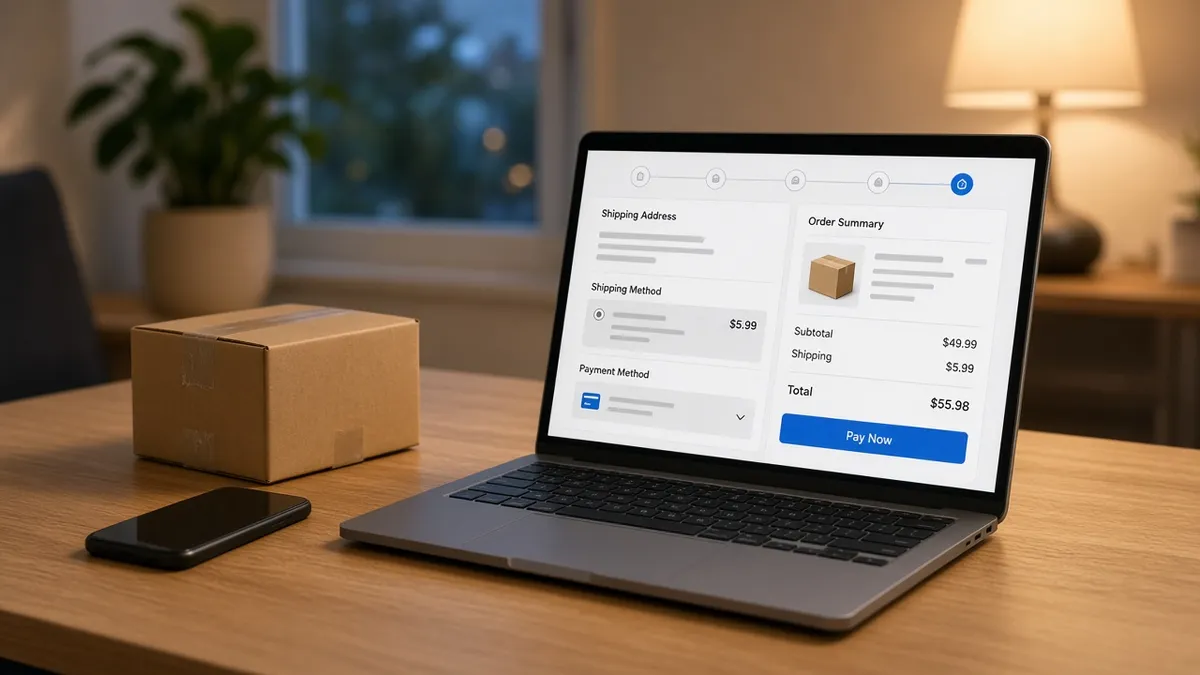
PayPal makes about nine of every ten dollars from transaction fees, mostly the percentage-plus-fixed-fee it charges merchants and sellers to accept payments. In the third quarter of 2026, PayPal reported $8.58 billion in revenue, of which $7.71 billion was transaction revenue and $873 million came from “other value added services” such as interest, credit and partner fees, according to its Q3 2026 quarterly filing.
Shoppers rarely see a PayPal fee. Sellers do, and so do people who want their money faster, in another currency, or from a credit card.
Key takeaways
PayPal’s two revenue buckets
PayPal reports revenue in just two lines. Everything else is detail inside them.
Transaction revenue is the fees PayPal charges to complete a payment: checkout fees paid by merchants, Braintree processing for big companies, fees on goods-and-services payments, currency conversion, instant transfers and crypto trading. It was $7.71 billion in Q3 2026, up 3% year on year.
Revenues from other value added services is a mixed bag: interest earned on the money sitting in customer balances, interest and fees on PayPal’s merchant and consumer loans, gains when it sells loans, and fees from partners. It was $873 million in Q3 2026, down 2%, partly because lower interest rates shrink what PayPal earns on customer balances.
Source: PayPal Form 10-Q for the quarter ended September 30, 2026. Percentages calculated by MaiaLafortezza.com.
For the full year 2025, PayPal’s revenue was $33.2 billion: $29.8 billion of transaction revenue (89.8%) and $3.4 billion from other value added services (10.2%), with net income of $5.2 billion, according to its 10-K for the year ended December 31, 2025, filed February 3, 2026. That annual mix is the same 89.8/10.2 split as Q3 2026.
What percentage does PayPal take?
It depends on who’s paying whom and how. These are PayPal’s standard US rates for receiving a domestic payment, from its merchant fee page last updated November 4, 2026. International payments add 1.5%.
How much does PayPal take out of $100?
| How the $100 is paid | US rate | Fee | You receive |
|---|---|---|---|
| PayPal Checkout or Pay with Venmo | 3.49% + $0.49 | $3.98 | $96.02 |
| Card payment through PayPal | 2.99% + $0.49 | $3.48 | $96.52 |
| Goods and services payment (send/receive money) | 2.99% | $2.99 | $97.01 |
| Buyer pays with PayPal Pay Later | 4.99% + $0.49 | $5.48 | $94.52 |
| Friends and family, from balance or bank | No fee | $0 | $100.00 |
Source: PayPal US merchant fees page, last updated November 4, 2026, and consumer fees page, last updated May 19, 2026. The USD fixed fee on a domestic friends-and-family card payment is $0.30. Sending a personal payment with a card costs the sender 2.90% plus a fixed fee.
Those headline rates overstate what PayPal earns on an average dollar. In Q3 2026 PayPal processed $487.1 billion of total payment volume and booked $7.71 billion of transaction revenue. That’s a take rate of about 1.58%. It’s lower than 3.49% because large merchants on Braintree negotiate much cheaper processing, and a big slice of volume is free peer-to-peer transfers.
And PayPal doesn’t keep all of it. Transaction expense, mostly what PayPal pays card networks and banks to move the money, was $4.25 billion in Q3 2026. That’s about $49.50 of every $100 of revenue going straight back out, before another $4.50 for fraud and credit losses. What’s left is what PayPal reports as transaction margin dollars, $3.95 billion that quarter ($8.58 billion of net revenues minus $4.25 billion of transaction expense and $386 million of transaction and credit losses).
How does PayPal make money from Pay in 4?
From the merchant. Pay in 4 lets a shopper split a purchase into four interest-free payments over six weeks, so the shopper pays nothing extra if they pay on time. The merchant pays PayPal’s Pay Later rate of 4.99% plus $0.49, a 1.5-point premium over standard checkout, because buy now, pay later tends to lift basket sizes. PayPal said average order values are more than 80% higher when shoppers choose its BNPL option.
PayPal also avoids tying up its own cash. In September 2025 it agreed to sell about $7 billion of US Pay in 4 receivables over two years to funds managed by Blue Owl Capital, while keeping underwriting and customer service. That’s a balance-sheet-light approach: PayPal earns the merchant fee and a servicing role, and investors carry most of the loan book.
The product is growing. PayPal’s buy now, pay later volume passed $40 billion in 2025, and Pay Later volume rose 25% in Q3 2026, per management on the October 27, 2026 earnings call.
How does Venmo make money?
Venmo is free for most of what people use it for, sending money to friends from a bank, debit card or balance. It earns in five ways:
Instant transfers. Moving money to your bank in minutes costs 1.75% (minimum $0.25, maximum $25). Standard transfers are free.
Credit card funding. Sending money with a credit card costs the sender 3%.
Seller and business fees. Personal accounts pay 2.99% on payments tagged as goods and services, business profiles pay 1.9% plus $0.10, and merchants pay 3.49% plus a fixed fee for Pay with Venmo at checkout.
Cards. The Venmo debit card earns interchange when used. It hit 6.7 million monthly active accounts in Q3 2026, up more than 55%.
Extras. Check cashing (2% to 5%, $6 minimum) and crypto trading fees of 1.5% to 2.2%.
It adds up. Venmo revenue grew about 20% to $1.7 billion in 2025, excluding interest income, according to PayPal’s fourth-quarter 2025 earnings call on February 3, 2026. Management says only 23% of Venmo users currently use its financial services, which is where it sees the next leg of growth.
Where the rest of PayPal’s money comes from
A few smaller streams round out the picture:
Currency conversion. PayPal adds a spread of 3% to 4% when it converts currency, one of its most profitable fees.
Interest on balances. PayPal earns interest on customer money held in its accounts, reported in the value-added services line.
Merchant and consumer credit. Working capital loans, PayPal Credit and installment products generate interest and fees.
Partner and affiliate fees. Honey earns commissions when shoppers use its coupons and cash back, explained in how Honey makes money. Xoom earns on international remittances.
Is PayPal profitable?
Very. PayPal earned $1.07 billion of net income in Q3 2026 on $8.58 billion of revenue, though that was down 14% from a year earlier as restructuring costs rose. Revenue grew just 2%. Online branded checkout, PayPal’s highest-margin product, has been growing only 1% to 2%, which is why new CEO Enrique Lores, appointed in February 2026 and effective March 1, 2026, is leaning on Venmo, Pay Later and payment processing for growth.
If you’re wondering who actually owns the company behind those profits, our guide to who owns PayPal breaks down the big shareholders.
How PayPal compares with other money apps
The contrast with consumer fintechs is instructive. Chime earns mostly from card swipe fees and short-term credit, covered in how Chime makes money. Cash App, PayPal’s closest rival for Venmo users, leans on its card, instant deposits and bitcoin, as we show in how Cash App makes money. PayPal earns mostly from merchants who want its checkout button, and it gives the consumer side away to keep that button valuable.
Our read: PayPal’s fee schedule isn’t the risk. Its risk is that merchants and shoppers find cheaper ways to pay, from Apple Pay to card networks’ own checkout tools. That’s why the take rate keeps drifting down while volume keeps rising.
Frequently asked questions
Is PayPal free to use?
For buyers, mostly yes. Paying for a purchase or sending money to friends and family in the US from your PayPal balance or bank account is free. You pay fees when you send with a credit card, send money abroad, convert currency, or withdraw instantly instead of waiting for a free standard transfer.
Does PayPal charge fees for friends and family?
Not in the US when the money comes from your PayPal balance or a linked bank account. Funding a personal payment with a credit or debit card costs the sender 2.90% plus a fixed fee, and sending to someone in another country adds a 5% international fee, with a $0.99 minimum and $4.99 maximum.
Is Elon Musk the owner of PayPal?
No. Elon Musk co-founded X.com, the company that merged with Confinity and became PayPal, but he doesn’t own PayPal today. PayPal Holdings is a public company owned by its shareholders, mostly large investment funds, as our guide to PayPal’s ownership explains.
How many people use PayPal?
PayPal had 440 million active accounts at the end of September 2026, up from 438 million a year earlier (PayPal reports that as a 1% increase), according to its third-quarter 10-Q. An active account is one that completed at least one transaction in the previous 12 months, so the number includes occasional users as well as daily ones.
Discussion