How Does Honey Make Money? Affiliate Commissions, Explained
How does Honey make money? Stores pay it affiliate commissions when you buy after using it. How that works, and why creators sued PayPal.
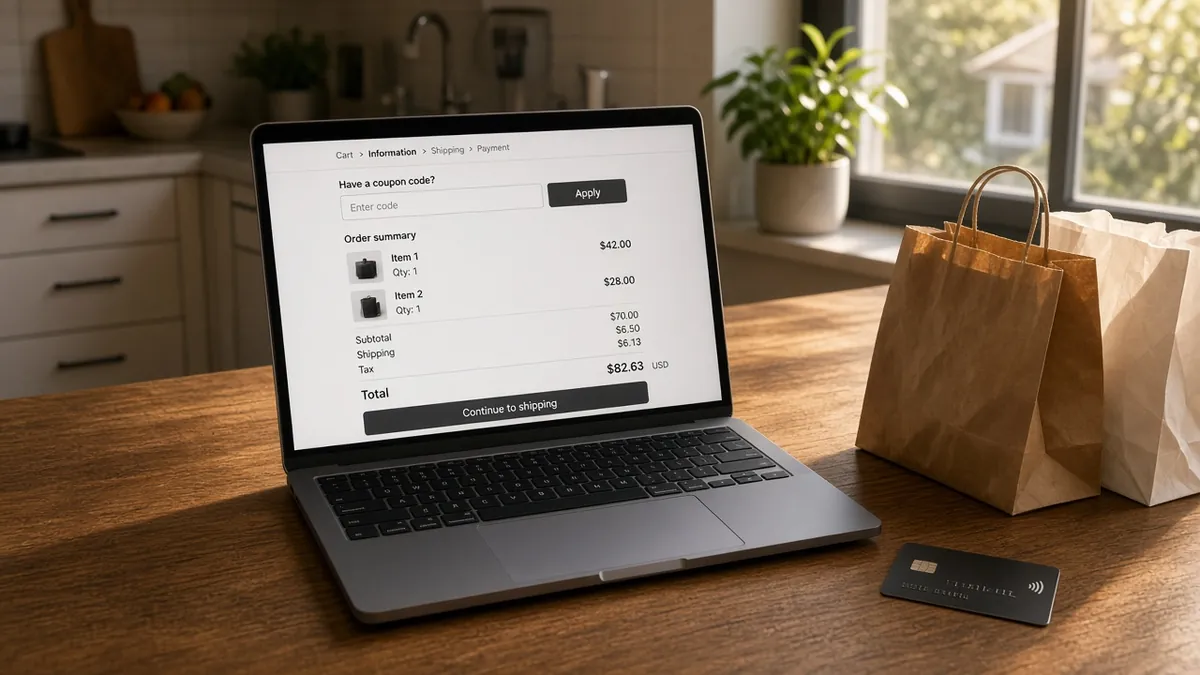
Honey makes money from affiliate commissions: when you buy something after using the extension, the store pays Honey a cut of the sale, and Honey passes a slice of that back to you as PayPal Rewards. Its own help center says so, and it charges shoppers nothing.
That simple model is also why Honey ended up in court. Commissions are paid to whoever gets credit for the sale last, and since December 2024, content creators have argued that Honey was taking credit for sales they drove.
Key takeaways
How does Honey make money?
Through affiliate deals. Merchants run programs that pay a percentage of each sale to whoever referred the shopper, often through affiliate networks that track the referral. Honey signs up as one of those referrers.
Honey’s help center, last updated November 25, 2024, says it earns commissions from merchant partners when a member uses Honey to find savings or to activate PayPal Rewards, and that it works with affiliates to confirm the purchase. It adds that sharing those earnings with members is what lets it offer a free service without selling anyone’s data.
How much of the commission do you get back?
Honey doesn’t say. Its help center describes passing “some” of its earnings back to members as PayPal Rewards points, which can be redeemed for gift cards among other options. Whatever isn’t passed back is Honey’s revenue. Because each merchant sets its own commission rate, the split you’d get on a pair of shoes may look nothing like the split on a laptop.
The mechanics run through “last-click attribution,” the affiliate industry’s standard rule. A tracking ID is stored in your browser when you click a referral link, and the most recent one at checkout gets paid. It’s the same pay-per-referral logic behind trivago’s click business, with one difference: Honey sits inside your browser at the moment you pay.
The creator’s affiliate ID is saved in your browser
Honey pops up and offers to look for coupons or rewards
Honey’s affiliate ID can replace the creator’s
Under last-click rules, the commission goes to Honey
Why last-click attribution sits at the center of the Honey dispute. Steps 3 and 4 describe what the plaintiffs allege, as summarized in the court’s June 22, 2026 order.
Why did PayPal pay $4 billion for Honey?
For reach and shopping data at the start of a purchase. When PayPal announced the deal on November 20, 2019, it said Honey had about 17 million monthly active users, worked with roughly 30,000 online retailers and had been profitable on a net income basis in 2018. PayPal planned to bring Honey to its and Venmo’s 275 million active consumer accounts and offer deals from its 24 million merchant accounts.
Our arithmetic: $4 billion divided by 17 million monthly users is about $235 per user. That’s a lot for a coupon tool unless you value what Honey sees, namely what people are about to buy and where. The deal closed on January 6, 2020. Our look at who owns PayPal covers the parent company Honey now sits inside.
PayPal doesn’t report Honey’s revenue separately, so how much it earns today isn’t public.
What is Honey getting sued for?
For allegedly taking affiliate commissions that belonged to creators. The case began after YouTuber MegaLag published a video in December 2024 alleging that Honey replaced creators’ affiliate IDs at checkout, even when it found no coupon. A class action followed on December 29, 2024: Wendover Productions, LLC v. PayPal Inc., case 5:24-cv-09470 in the Northern District of California.
The case has moved in stages, according to the court’s own orders:
- November 21, 2025: the judge dismissed the first amended complaint for lack of standing, with permission to refile.
- January 5, 2026: plaintiffs filed a second amended complaint with contract terms and test purchases.
- June 22, 2026: Judge Beth Labson Freeman denied PayPal’s motion to dismiss, letting claims under the Computer Fraud and Abuse Act, California’s computer and unfair competition laws, Washington’s consumer protection law, tortious interference and unjust enrichment go forward.
The complaint says affiliate commissions can reach up to 40% of a sale price, as the court summarized it. PayPal had argued that any lost commissions were caused by the last-click system, which it doesn’t control. Bloomberg Law reported the June 2026 ruling the next day. None of this is a finding that PayPal did anything wrong; it means the case goes to discovery.
How Honey’s model changed after the backlash
The rules tightened around it. Google updated the Chrome Web Store’s affiliate ads policy on March 11, 2025. It now says affiliate links, codes or cookies may only be included when the extension gives a direct and transparent user benefit, and that a related user action is required before each one is added.
Then came more allegations. MegaLag’s second video, on December 21, 2025, alleged that Honey scraped private coupon codes and shared them with its users, and his third, on December 30, alleged that Honey ran code that hid its behavior from affiliate networks, The Verge reported. PayPal told the affiliate-industry publication Hello Partner on January 15, 2026 that the code predated its acquisition, affected less than 0.1% of Honey’s traffic and no longer had any effect.
Affiliate networks moved too. In January 2026, Rakuten Advertising and Impact.com cut or suspended Honey, according to their notices to partners, and Awin chief executive Adam Ross said in a January 21, 2026 statement that its own investigation confirmed breaches of its publisher policies. Each network that drops Honey removes merchants it can earn on.
Users noticed. The Washington Post reported in May 2025 that Honey had lost more than 4 million users since the allegations surfaced, and 9to5Google reported on December 31, 2025 that it had lost about 8 million Chrome users in a year.
Does Honey charge a fee?
No. Honey is free to install and use. The money comes from merchants, not shoppers, which is why Honey is so eager to be active at checkout.
Is Honey a scam?
Not for shoppers in the usual sense: it doesn’t charge you, and it’s owned by PayPal, a regulated payments company. The disputes are about who gets paid for a sale and whether Honey shows every available code. My take: if you buy through a creator’s link because you want that creator paid, turn Honey off for that purchase.
Is Honey actually worth it?
For a shopper, the cost is zero and the upside is occasional: it sometimes finds a working code, and it pays some commission back as PayPal Rewards. The trade-offs are the shopping data it collects and, if you buy through creators’ links, the commissions they may lose when Honey gets the last click.
Does Honey sell your data?
Honey says it doesn’t. Its help center says commissions are what fund the free service “without selling anyone’s data.” It does collect your shopping activity to find deals and track prices.
FAQ
Who founded Honey?
Ryan Hudson and George Ruan founded Honey in Los Angeles in 2012, starting with a browser extension that tested coupon codes at checkout. PayPal agreed to buy the company for about $4 billion in November 2019 and closed the deal in January 2020. Honey now operates as PayPal Honey.
How do receipt apps differ from Honey?
Honey earns through affiliate links at online checkout. Receipt apps like Fetch get paid differently: brands fund rewards for buying their products, in store or online. That model doesn’t depend on who clicked a link last, so it avoids the attribution fight Honey is in.
Honey’s model was never complicated. It gets paid for being the last stop before you buy. The open question for 2027 is whether courts and affiliate networks still let it be that stop.

Discussion