How Does Chime Make Money? Swipe Fees, MyPay and Instant Loans
How does Chime make money? Chime earns mostly from card swipe fees, plus a growing share from MyPay and Instant Loans.
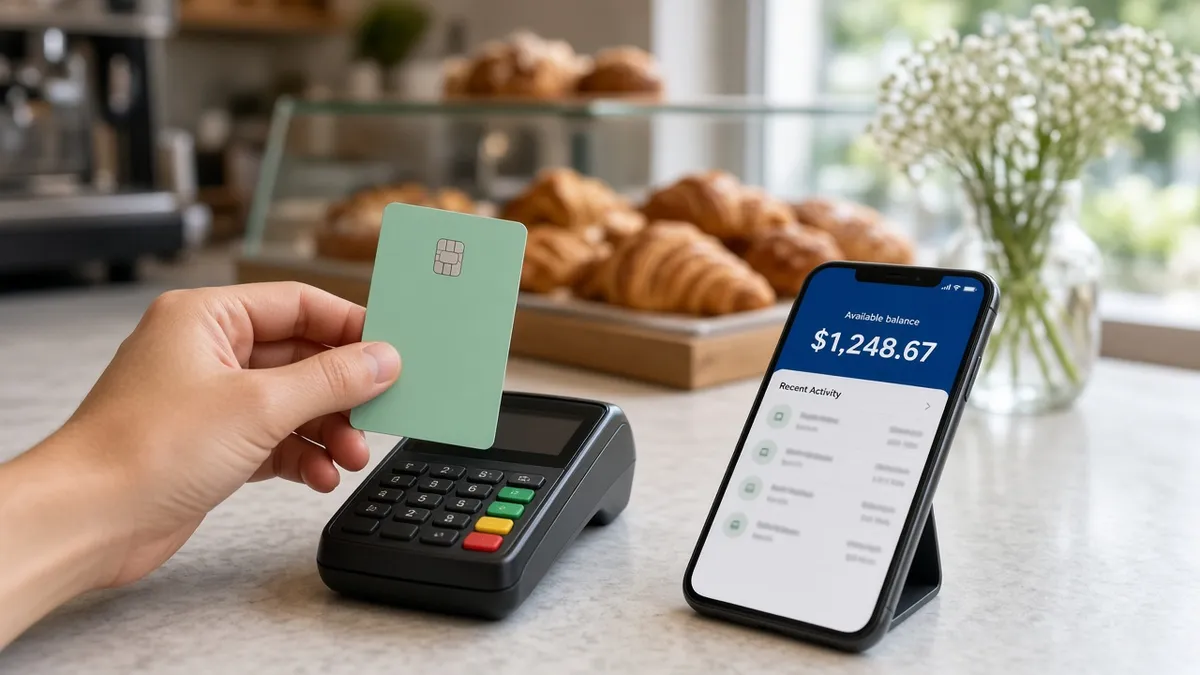
Chime makes most of its money from interchange, the small fee a merchant pays through the card network every time a Chime debit or credit card is used, and a fast-growing share from short-term credit through MyPay and Instant Loans. In the third quarter of 2026, Chime reported $718 million in revenue: $444 million in payments revenue and $274 million in platform-related revenue, according to its November 4, 2026 earnings release.
So the “free” account isn’t a charity. You don’t pay a monthly fee, but the store you shop at does, and a growing number of members pay for speed when they borrow against their next paycheck.
Key takeaways
How does Chime make money without fees?
Every time you tap or swipe a Chime Visa card, the merchant pays a processing fee. Visa routes part of it, the interchange, to the bank that issued the card, and Chime gets its share through its partner banks, The Bancorp Bank and Stride Bank. You pay nothing extra at the till.
Here’s the part most explainers skip: how much that is per purchase. Chime reported $444 million of payments revenue on $38.5 billion of purchase volume in Q3 2026. Divide one by the other and you get about 1.15%, or roughly $1.15 for every $100 a member spends. Treat that as an estimate, since payments revenue isn’t a pure interchange line, but it’s the right order of magnitude.
Why can a fee-free bank live on that? Partly because of where the cards are issued. The Durbin Amendment caps debit swipe fees only at banks with more than $10 billion in assets, and Chime issues through smaller partners. Chime’s own filing lists “changes in rules and practices concerning interchange fees” as a business risk, which tells you how much rides on it.
The other half of the equation is habit. Chime only earns when cards get used, so it pushes members to make Chime their main account: direct deposit, paychecks up to two days early, fee-free overdraft through SpotMe. A member whose paycheck lands at Chime swipes Chime for groceries and gas.
Chime does charge some fees. Its deposit terms allow out-of-network ATM and over-the-counter withdrawal fees, and instant MyPay delivery costs extra. There are no monthly maintenance, overdraft or minimum-balance fees.
Chime’s revenue mix is shifting toward lending
Q3 2025: $543.5 million
Q3 2026: $718 million
Source: Chime Q3 2025 and Q3 2026 results. Q3 2026 shares calculated from $444M payments and $274M platform-related revenue.
Chime’s revenue streams, line by line
Chime reports two buckets. Payments revenue is the swipe money. Platform-related revenue covers everything else: MyPay, Instant Loans and, per Chime’s own explainer, income tied to member deposits held at its partner banks and other products.
| Stream | Who pays | Latest reported figure |
|---|---|---|
| Payments (interchange on debit and credit cards) | Merchants, via Visa | $444M in Q3 2026, up 22% |
| MyPay (paycheck advances) | Members who choose instant delivery | Annualized revenue above $500M |
| Instant Loans | Borrowers (interest) | Annualized revenue above $115M |
| Total platform-related | Mixed | $274M in Q3 2026, up 52% |
Source: Chime Q3 2026 earnings release, November 4, 2026. Annualized figures are Chime’s own run-rate statements.
Credit cards matter more than they used to. Chime said its Chime Card and Prime tier lifted credit to 29% of purchase volume, nearly double a year earlier. Credit purchases tend to carry higher interchange than debit, which helps the swipe line even as growth shifts elsewhere.
How does Chime make money on payday advances?
MyPay is a line of credit, provided by Chime’s partner banks, that lets eligible members take part of their pay before payday. There’s no interest and no credit check. The money is free if you wait up to 24 hours. If you want it instantly, Chime charges 3% of the advance, with a $2 minimum and $5 maximum, per its MyPay disclosures.
That optional fee is the business. Chime originated a record $5.3 billion of MyPay advances in Q3 2026, with loss rates around 1%, and said annualized MyPay revenue topped $500 million. A quarter of that run-rate is about $125 million. Against $5.3 billion of advances, that works out to roughly 2.4% earned per dollar advanced, which tells you most members do pay for speed.
A quick reality check on the price. A $3 fee on a $100 advance repaid two weeks later is cheap in dollars. Annualized, it’s about 78%. That’s still far below payday lenders, but it’s not nothing, and it’s avoidable if you can wait a day.
Instant Loans are the newer, more traditional product: small installment loans with interest. More than 20% of active members use them, and Chime originated $381 million in the quarter. SpotMe, the fee-free overdraft cover, earns no fee directly. It exists to keep your paycheck and your swipes at Chime.
Is Chime a profitable company?
Yes, recently. Chime posted $44 million of net income in Q3 2026, its third consecutive quarter of GAAP profit. For the first nine months of 2026, net income was $125 million, against a $965 million net loss in the same stretch of 2025, when stock compensation tied to its June 2025 Nasdaq listing swamped the results.
Adjusted EBITDA was $137 million in Q3 2026, a 19% margin. Chime raised its full-year 2026 revenue guidance to between $2.792 billion and $2.802 billion. Active members reached 10.9 million, and average revenue per active member hit $270 a year, or about $22.50 a month per person. For the full year 2025, Chime’s 10-K filed March 6, 2026 shows $2.187 billion of revenue: $1.501 billion of payments revenue (68.6%) and $686 million of platform-related revenue (31.4%). The Q3 2026 mix is the more current snapshot.
What changes when Chime owns a bank?
Chime has agreed to buy Stride Bank’s parent company. The deal is expected to close in the first half of 2027, subject to regulators, and Chime expects more than $100 million in annual net after-tax synergies. Owning a bank means keeping more of the economics it now shares with partners and moving faster on lending products. The same earnings release says Chime has begun testing a new line of credit for Chime Prime members.
Our read: the more Chime earns from lending, the more it looks like a bank and the more scrutiny it invites. That’s not a knock. It’s the trade every fintech makes once swipe fees stop growing fast enough on their own.
How Chime compares with other money apps
Chime’s model is the opposite of the traditional checking account, where deposit fees and lending spreads do the heavy lifting. Our guide to how banks make money shows how much of a bank’s income comes from lending against your deposits. Cash App leans on bitcoin, instant transfers and its card, which we break down in how Cash App makes money.
Payment apps work differently again. PayPal, a public company whose shareholders we break down in who owns PayPal, charges merchants a percentage on checkout, covered in how PayPal makes money, while bank-owned Zelle earns nothing from users at all, as our Zelle explainer shows.
MyPay isn’t the only short-term credit product built around small, fast amounts. Klarna lends at checkout instead of against your paycheck, and its business runs on a different mix of fees, interest and loan sales, covered in how Klarna makes money.
Frequently asked questions
Is Chime a bank?
No. Chime is a financial technology company. Your checking and savings accounts are held at The Bancorp Bank, N.A. or Stride Bank, N.A., both FDIC members, so deposits are insured up to standard limits through those banks. That could change if Chime’s pending purchase of Stride Bank’s parent closes in 2027.
Does Chime charge any fees?
Chime doesn’t charge monthly maintenance, overdraft or minimum-balance fees. You can still pay for out-of-network ATM and over-the-counter cash withdrawals, and instant MyPay delivery costs 3% of the advance ($2 minimum, $5 maximum). Retailers may add their own fees for cash deposits.
What is the downside of using Chime?
Chime doesn’t charge monthly or overdraft fees, but you can still pay for out-of-network ATM and over-the-counter cash withdrawals, and instant MyPay delivery costs extra. Chime also isn’t a bank itself. Your deposits sit at The Bancorp Bank or Stride Bank, insured by the FDIC through those banks up to standard limits.
How many people use Chime?
Chime had 10.9 million active members at the end of September 2026, up 20% from a year earlier, according to its Q3 2026 results. Chime counts a member as active if they made a money movement, such as a card purchase or a MyPay advance, in the last month of the quarter.
If you bank with Chime, the cheapest way to use it is the way Chime would most like you not to think about: swipe normally, skip the instant fees, and let the merchants pay for your account.


Discussion