Nike SWOT Analysis 2026: Strengths, Weaknesses, Opportunities and Threats
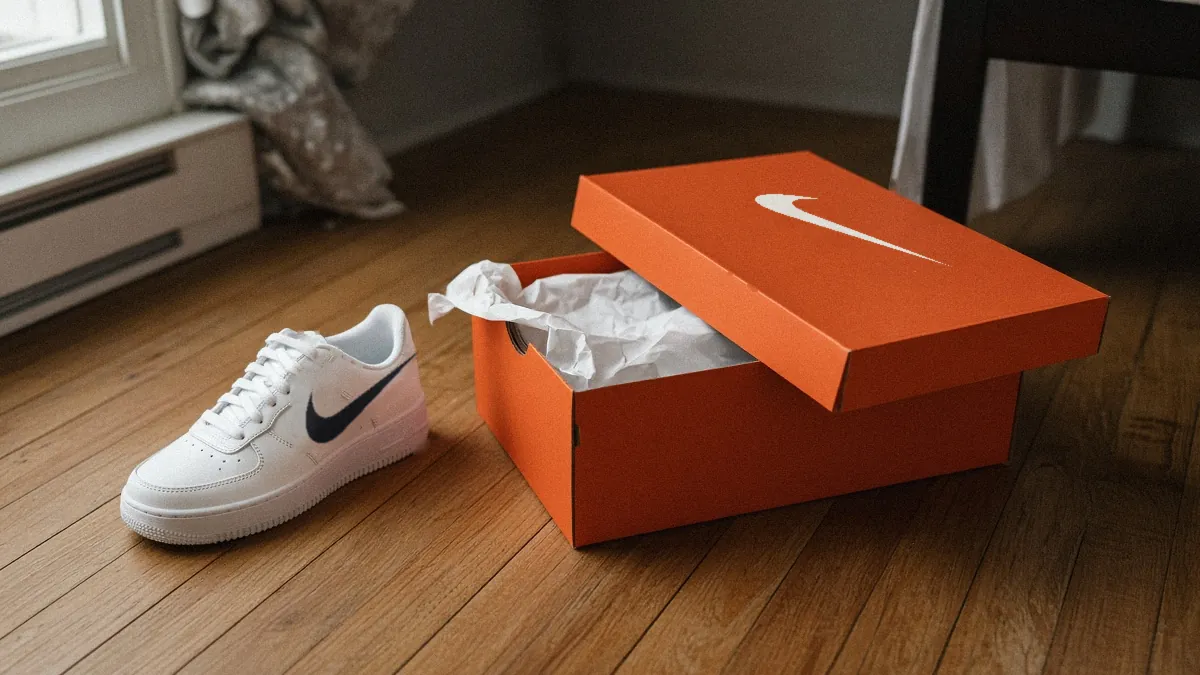
A Nike SWOT analysis for late 2026 comes down to this: a giant brand with $46.4 billion in annual revenue, losing ground in China, digital and lifestyle sneakers while its performance products recover. The biggest threats are a resurgent Adidas, faster challenger brands and a turnaround that keeps slipping.
The numbers behind that verdict come from Nike’s fiscal 2026 results (year ended May 31, 2026) and its first quarter of fiscal 2027, reported October 1, 2026. In that release, Nike guided full-year revenue to fall by a high-single-digit percentage.
Key takeaways
Strengths
Weaknesses
Opportunities
Threats
Nike’s 2026 SWOT at a glance, based on fiscal 2026 and Q1 fiscal 2027 results.
Nike by the numbers: what this SWOT is built on
Most Nike SWOT pages still quote the $51 billion era. That’s two years out of date. Here’s where the business actually stood at the end of fiscal 2026.
| Segment | FY2026 revenue | Change (reported) | Share of total |
|---|---|---|---|
| North America | $20.5B | +5% | 44% |
| EMEA | $12.6B | +3% | 27% |
| Asia Pacific & Latin America | $6.2B | Flat | 13% |
| Greater China | $5.8B | -11% | 12.5% |
| Converse | $1.2B | -31% | 3% |
| Total NIKE, Inc. | $46.4B | Flat | 100% |
Source: Nike’s fiscal 2026 results filing, June 30, 2026. Shares are my calculation and don’t add to exactly 100% because of rounding and corporate items.
Nike’s strengths
Scale nobody else in sportswear matches. Nike booked $11.2 billion in revenue in its quarter ended August 31, 2026. Adidas, its nearest rival, put its July to September quarter at about €7.25 billion (roughly $8.1 billion) in preliminary figures. Even shrinking, Nike is bigger.
A marketing budget that buys attention. Demand creation expense hit $4.75 billion in FY2026, about 10% of revenue. That money pays for athletes, sponsorships and campaigns that smaller brands can’t match dollar for dollar.
Jordan Brand. At $7.0 billion in FY2026, Jordan alone is about 16% of Nike Brand revenue and bigger than most standalone sportswear companies.
Footwear depth. Footwear brought in $29.5 billion, roughly 65% of Nike Brand revenue, across running, basketball, football and lifestyle.
A solid balance sheet. Nike ended FY2026 with $9.0 billion in cash and short-term investments and paid $2.4 billion in dividends. Inventory was $7.8 billion at the end of Q1 FY2027, down 3%, so it isn’t carrying the glut that hurt it in 2022 and 2023. The ownership side is covered in our breakdown of who owns Nike.
What are Nike’s weaknesses?
Greater China is in freefall. Revenue there fell 11% in FY2026, then 22% in Q1 FY2027. China was once Nike’s growth engine. It’s now 12.5% of revenue and shrinking fast.
The direct-to-consumer bet backfired. Nike spent years pulling product away from retailers to sell through its own app and stores. NIKE Direct fell 6% in FY2026 and Nike Brand Digital fell 12%, then 13% in Q1 FY2027. The pivot left shelf space open for rivals.
Lifestyle sneakers lost heat. CEO Elliott Hill said in October 2026 that Sportswear, Jordan and Greater China still need significant work. Jordan revenue fell 3% in FY2026, and Nike has said it needs to pull back on retro releases after oversupplying them.
Converse keeps shrinking. Revenue fell 31% in FY2026 to $1.2 billion and another 28% in Q1 FY2027, with declines in every territory.
Restructuring fatigue. Pace is Nike’s third restructuring program since fiscal 2024, according to BNP Paribas analyst Laurent Vasilescu, quoted by Retail Dive. Needham’s Tom Nikic described visibility on the turnaround as very low.
Nike’s opportunities
Performance is coming back first. Nike points to progress in running, training and basketball under its “Sport Offense” strategy, which organizes teams around individual sports. Performance is where Nike lost credibility to newer running brands, so wins there carry more weight than another retro colorway.
Wholesale is growing again. Wholesale revenue rose 6% in FY2026 to $27.5 billion, about 61% of Nike Brand sales. Rebuilding retailer relationships puts Nike back in front of shoppers who never opened its app. If you want the mechanics, our guide to types of business models explains the wholesale versus direct trade-off.
Pace could fix the cost base. Announced October 1, 2026, Pace targets about $2.5 billion in cumulative savings through fiscal 2031. It merges Nike’s regions into three (Americas, APGC and EMEA), adds a campus in Bengaluru, India, and moves money toward product and storytelling. Job cuts are expected, with notifications starting in 2027.
Tariff relief. Nike recognized a $986 million expected recovery of IEEPA tariffs in Q4 FY2026, which it said largely offset the IEEPA tariff cost for the year.
What are Nike’s biggest threats?
Adidas has the momentum. In preliminary figures published October 20, 2026, Adidas reported record Q3 revenue of €7.25 billion, up 9%, with operating profit up 37% to €1.01 billion, helped by a roughly €200 million US tariff refund. It raised its 2026 operating profit outlook to about €2.5 billion. Nike, meanwhile, cut its outlook. Our full comparison of Nike’s competitors covers the wider field.
Challenger running brands. On and Hoka built premium running businesses in the space Nike vacated while chasing lifestyle volume. Winning those runners back takes years of product, not one campaign.
Local competition in China. The 22% Q1 drop suggests the problem is bigger than a weak economy. Domestic sportswear brands appear to be winning shoppers who once defaulted to Western labels.
Trade policy. Nike makes most of its products in Asia, so tariff swings hit its costs directly. The Q4 FY2026 tariff recovery shows how much these decisions move results: it added about 900 basis points to that quarter’s gross margin.
What this Nike SWOT analysis adds up to
Our read: Nike’s strengths are real but slow-moving, and its weaknesses are showing up in the numbers right now.
Run the guidance through the math. Revenue was $51.4 billion in FY2024 and $46.4 billion in FY2026. A high-single-digit decline in FY2027 (7% to 9%) puts sales at roughly $42.2 billion to $43.2 billion. That would leave Nike about 16% to 18% smaller than its FY2024 peak, three years into a turnaround.
The margin story needs the same care. Q4 FY2026 gross margin was 49.2%, but strip out the tariff recovery and it was about 40.2%. Q1 FY2027’s 42.8% is the cleaner number to watch.
For an aspiring founder, the lesson is specific: Nike’s DTC push optimized for margin per sale and lost reach. It’s now paying to buy that reach back from the retailers it squeezed.
FAQ
What are the 4 Ps of Nike?
Product: footwear (about 65% of Nike Brand revenue), apparel and equipment. Price: premium, with discounting reduced to protect the brand. Place: wholesale partners (61% of Nike Brand sales) plus Nike’s own stores and app. Promotion: a $4.75 billion demand creation budget built on athletes and sponsorships.
Is Nike still the biggest sportswear company?
Yes, by revenue. Nike’s $11.2 billion quarter to August 2026 compares with about $8.1 billion for Adidas in its July to September 2026 quarter. The gap is narrowing, though: Adidas is growing high single digits while Nike guided to a high-single-digit decline for fiscal 2027.
Who runs Nike now?
Elliott Hill has been CEO since October 2024. He’s a Nike veteran who returned from retirement to lead the turnaround. His priorities are the Sport Offense structure, rebuilding wholesale relationships and the Pace cost program announced in October 2026.

Discussion