When Did Musical.ly Become TikTok?
When did Musical.ly become TikTok? On August 2, 2018, ByteDance retired the brand and moved 100 million users into TikTok. Here's how the merger happened.
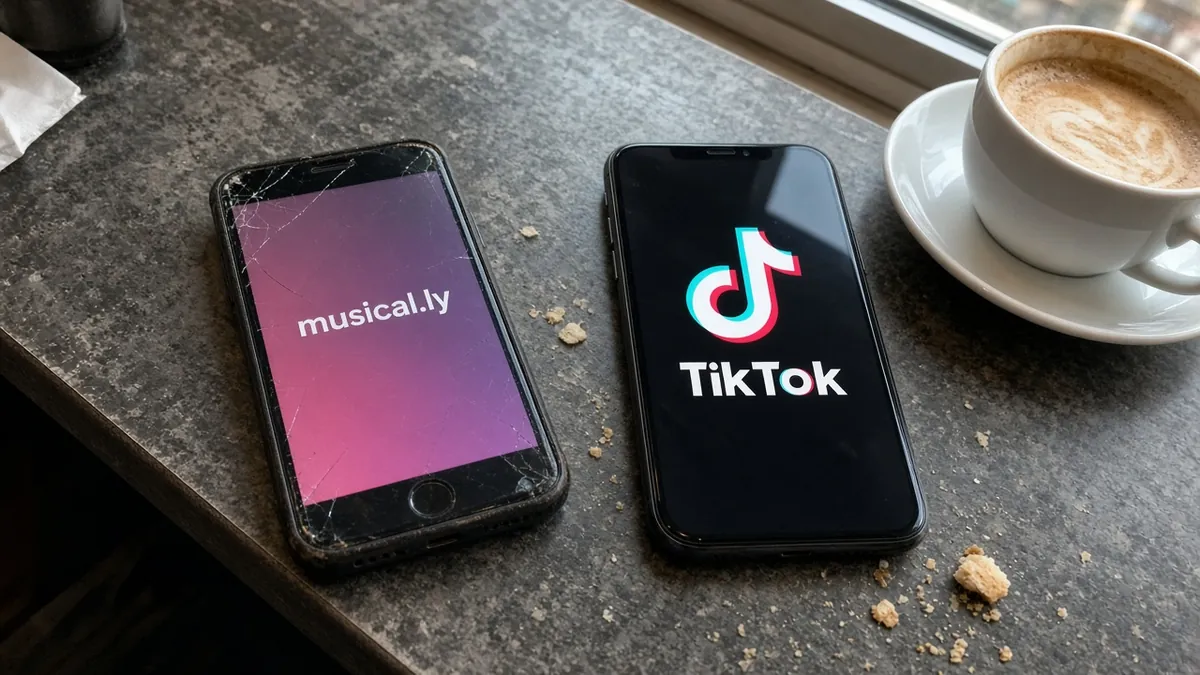
Musical.ly became TikTok on August 2, 2018. On that day ByteDance, which had bought Musical.ly in November 2017 for a reported $800 million to $1 billion, retired the Musical.ly brand and moved its roughly 100 million monthly users into TikTok with an app update.
Nobody had to start over. Accounts, videos and followers carried across automatically, as TikTok’s announcement explained. The app woke up with a new name, a new logo and a feed that now pulled in videos from TikTok’s much larger user base in Asia.
Aug 2014
Musical.ly launches, built in Shanghai by Alex Zhu and Luyu Yang.
Sep 2016
ByteDance launches a short-video app in China, soon renamed Douyin.
2017
ByteDance takes the format abroad as TikTok, starting in Asian markets.
Nov 2017
ByteDance buys Musical.ly. The price is never officially disclosed.
Aug 2, 2018
Musical.ly merges into TikTok. Users move over automatically.
Feb 2019
TikTok pays a $5.7 million FTC fine over children’s data collected by Musical.ly.
Jan 22, 2026
TikTok’s US business moves into a joint venture. ByteDance keeps 19.9%.
Why was Musical.ly changed to TikTok?
Because TikTok was already the bigger app. When the merger was announced, Musical.ly had about 100 million monthly active users, while TikTok had claimed 500 million that June, Reuters reported. Keeping the smaller brand would have meant renaming the larger one.
The two apps also barely overlapped. Musical.ly was strongest with teenagers in the Americas and Europe, while TikTok’s users were mostly in Asia. TikTok’s head of global marketing told Reuters that complementary geography was exactly why it was time to combine them.
The name fit the plan, too. ByteDance said TikTok better reflected content that went beyond music into comedy and performance. A brand with “musical” in it would have boxed the app in.
What was TikTok called in 2016?
Outside China it wasn’t called anything, because it didn’t exist yet. The app teens used for short lip-sync videos in 2016 was Musical.ly. Inside China, ByteDance launched a similar app in September 2016 as A.me and renamed it Douyin within a few months.
So was TikTok a thing in 2016? Only as Douyin, and only in China. The TikTok name arrived in 2017. Sources disagree on the month, some saying May and others September, and the rollout started in a handful of Asian markets rather than everywhere at once.
Who founded Musical.ly?
Alex Zhu and Luyu Yang founded Musical.ly in Shanghai. Their first product was an app for short educational videos, built on about $250,000 in funding, which Zhu later told Business Insider was destined to fail.
With most of that money gone, they kept the short-video format, swapped lessons for music and shipped Musical.ly in 2014. They didn’t throw out what they’d built, only the part nobody wanted to watch. Zhu became a senior TikTok executive after the merger.
Was buying Musical.ly a good deal?
My take: it was one of the cheapest user grabs in social media. At a reported $800 million to $1 billion for an app that reached 100 million monthly users, ByteDance paid roughly $8 to $10 per user. Facebook paid $1 billion for Instagram in 2012, when it had around 30 million users, which is more than $30 each.
The comparison isn’t perfect. Musical.ly hit 100 million after the deal, and Instagram’s count was registered users rather than monthly ones. But the gap is wide enough that the point stands: ByteDance bought a ready-made Western teen audience for an app it already knew how to grow.
The bill came later. First came the 2019 FTC fine over Musical.ly’s handling of kids’ data. Then came years of US national security pressure, which ended with TikTok’s US operations moving into a joint venture led by Oracle, Silver Lake and MGX in January 2026. Here’s the full picture of who owns TikTok now, and these TikTok usage statistics show how big the merged app became.
What happened to old Musical.ly accounts?
They became TikTok accounts. The migration carried over usernames, videos and followers, so if you had a Musical.ly profile in 2018, look for it through TikTok’s login and account recovery screens.
A few Musical.ly features hung on for a while. The crowns that marked popular creators, for example, lasted until TikTok replaced them with standard verification badges.
FAQ
Did TikTok buy Musical.ly?
Not exactly. ByteDance, TikTok’s parent company, bought Musical.ly in November 2017. TikTok was ByteDance’s own app, so the 2018 merger was one ByteDance app absorbing another rather than TikTok buying a rival. For about nine months after the purchase, ByteDance ran the two apps side by side before folding Musical.ly in.
Is Musical.ly coming back?
There’s no sign of it. ByteDance retired the brand in August 2018 and folded everything into TikTok. TikTok is now split between ByteDance’s global business and the US joint venture formed in January 2026, and neither has announced any plan to revive the old name.

Discussion