Food Marketplace Startups in Spain: The Names, the Exits and the Gaps
Food marketplace startups in Spain, from Glovo to CrowdFarming: how they make money, what their exits show, and why startup counts disagree.
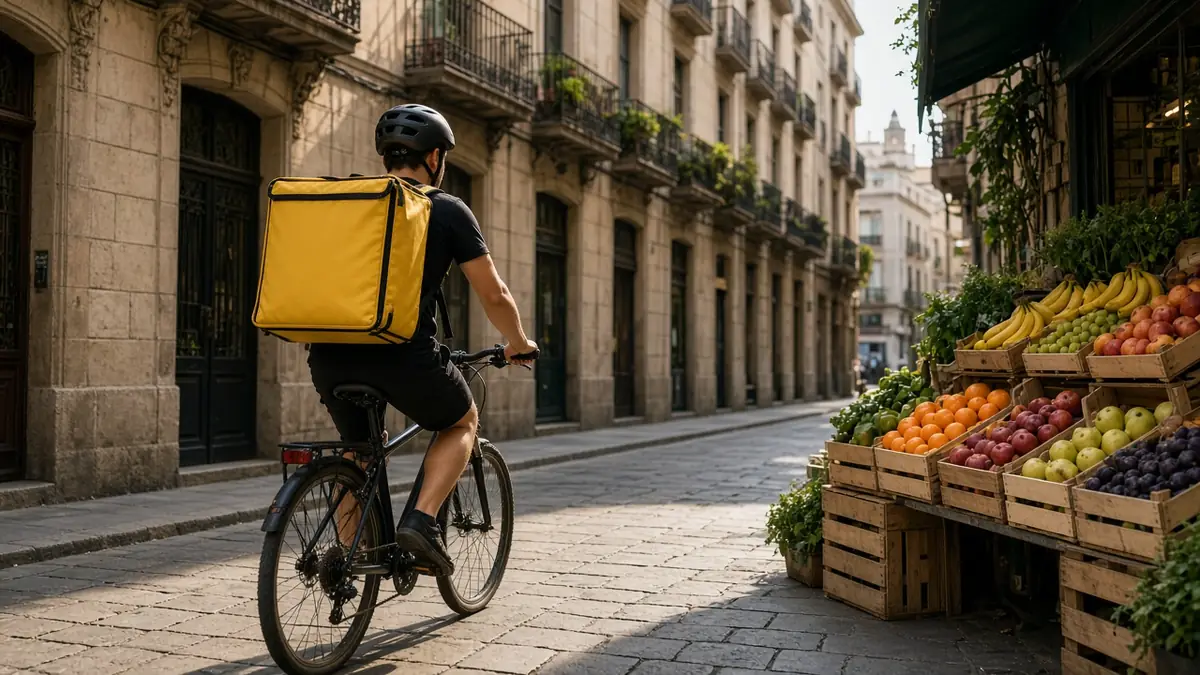
The food marketplace startups in Spain worth knowing are Glovo, the Barcelona delivery app that Delivery Hero has controlled since 2022; La Nevera Roja, the Madrid takeaway platform that was sold twice and ended up inside Just Eat; and CrowdFarming, which lets farmers sell straight to consumers and landed a €15 million EIB loan in 2023.
Behind those three sits a long tail of grocery, B2B and producer platforms. Most are small. A few will matter. Here’s how to tell them apart, and what the big ones teach anyone building a food marketplace in Spain today.
Key takeaways
How I chose these companies
I only included businesses that match three tests. They were founded in Spain, they connect buyers and sellers of food (rather than only selling their own product), and their key numbers are on record with a regulator, the company or a major outlet.
That rules out plenty of names you’ll see in “top 10” lists. Some are restaurant software, some are food brands, and some haven’t published anything since their seed round.
The Spanish food marketplace startups worth knowing
Glovo: the multi-category delivery app
Glovo was founded in Barcelona in 2015 by Oscar Pierre and Sacha Michaud. It started as a “deliver anything” app and grew into restaurants, groceries and pharmacy runs.
Delivery Hero had held a stake since 2018. On 31 December 2021 it agreed to buy roughly another 39.4%, paying in new Delivery Hero shares and taking its holding past 80%. At that point Glovo operated in 25 countries. Reuters put the implied valuation at about €2.3 billion. The deal closed in mid-2022.
Who it suits as a case study: founders who want to see how a marketplace widens categories to raise order frequency.
How it makes money: delivery fees from customers and commissions from merchants.
The honest drawback: labour costs. In December 2024 Delivery Hero said Glovo would move its Spanish riders, about 15,000 people, from freelance contracts to employment, and warned of a €100 million hit to 2025 adjusted EBITDA (Reuters, 2 December 2024). Spain had already fined Glovo €79 million in 2022 over rider contracts, according to the same Reuters report.
La Nevera Roja: the early exit
José del Barrio and Iñigo Juantegui founded La Nevera Roja in Madrid in 2011 as an online takeaway marketplace. Rocket Internet’s food group bought it in February 2015 for a reported €80 million (Expansión), one of the largest Spanish startup exits of that year.
Less than a year later, Just Eat bought it from Rocket. City A.M. reported in February 2016 that Just Eat paid €125 million for four businesses, La Nevera Roja plus delivery assets in Italy, Brazil and Mexico.
The lesson: in winner-takes-most markets, the second player’s best outcome is often a sale to the first. The founders sold at the right moment. The buyer didn’t hold it long.
CrowdFarming: farmers selling direct
CrowdFarming connects European farmers with households who buy boxes of seasonal produce, from oranges to olive oil, straight from the farm. It’s based in Spain and run by co-founder and CEO Gonzalo Úrculo.
In September 2023 the European Investment Bank signed a €15 million venture debt loan with the company, backed by the InvestEU programme. The EIB said more than 300 farmers from 13 European countries were selling through the platform at the time.
How it makes money: it handles the shop, logistics, customer service and marketing for farmers and earns its revenue on the orders that flow through.
The honest drawback: fresh produce is seasonal, bulky and perishable. Shipping it across Europe is expensive, and a bad harvest is a bad quarter.
Wetaca: the counterexample that isn’t a marketplace
Wetaca, the Madrid meal-prep company, often turns up in Spanish “food marketplace” lists. It isn’t one. It cooks its own dishes in a central kitchen and ships them chilled to subscribers.
That choice is the point. According to Xataka, citing Cinco Días (September 2025), Wetaca grew sales 23% in 2024 and doubled net profit to €602,000, with no riders and no platform commissions. The founders still held about 71% of the company.
Founder note: before you build a marketplace, ask whether you’d make more money owning the supply. Wetaca did.
The long tail
Startup databases list many smaller Spanish platforms: grocery delivery apps, producer-to-restaurant B2B marketplaces, gourmet shops and surplus-food apps. Names such as Deliberry (Barcelona, groceries) and HarBest Market (Madrid, restaurants buying from producers) appear regularly.
Check recent filings or news before treating any of them as active or growing. Database entries can lag reality by years.
How many food marketplace startups does Spain actually have?
Nobody agrees, and the gap is huge. Here’s what the data providers ranking on Google for this topic were showing in autumn 2026.
| Source | What it counts | Spain figure | Date shown |
|---|---|---|---|
| RevenueBase | “Food marketplace startups” | 63 companies | September 2026 |
| StartupBlink | Foodtech startups (all types) | 105 startups | Listing seen November 2026 |
| RevenueBase | “Local food marketplace platforms” | 109 companies | September 2026 |
| Tracxn | Food and beverage products startups | 855 startups | August 2026 |
The spread comes from definitions. Tracxn’s figure includes food producers like Heura and established companies like Ebro Foods. RevenueBase’s narrower count is closer to true marketplaces but still mixes in software vendors.
My read: the number of Spanish food marketplaces with venture funding and real order volume is a small fraction of any of these totals. If you’re sizing competition, build your own list from the categories you’d actually fight in.
How these startups make money
“Food marketplace” covers three different businesses. Each earns money from a different side of the transaction, which changes everything from margins to hiring.
The three food marketplace models in Spain and the side of the deal each one gets paid by.
Aggregators win on frequency but carry the heaviest operating costs. Producer-direct platforms get better margins per order but fewer orders per customer. B2B platforms have the steadiest demand and the slowest sales cycles. If you want to see how a grocery marketplace handles the same trade-offs at US scale, look at who owns Instacart and how it’s structured.
What a new food marketplace in Spain has to plan for
Labour rules come first. Spain became the first EU country to give delivery riders employee status, with its Riders Law in 2021. If your model depends on couriers, cost them as employees from day one. Glovo’s experience shows what happens when you don’t.
Liquidity is local. A marketplace that works in Madrid can be empty in Valencia. Launch city by city, and don’t spend on national marketing until one city fills itself.
Your moat probably isn’t the app. Anyone can copy the interface. The defensible parts are exclusive supply, logistics density and repeat habits, the same things I look for in any defensible business.
Know how the two sides pay. Most marketplaces end up charging the side that values the match most. The Airbnb business model is a useful template for thinking about split fees.
If I were starting a food marketplace in Spain this year, I wouldn’t build another consumer delivery app. I’d pick a narrow B2B corridor, say, one product category into one city’s restaurants, and get to profit on a few hundred loyal buyers before asking anyone for money. Glovo needed billions to win its market. You shouldn’t need to.



Discussion