Shield AI Valuation: $12.7 Billion Confirmed, $20 Billion Reportedly in Talks
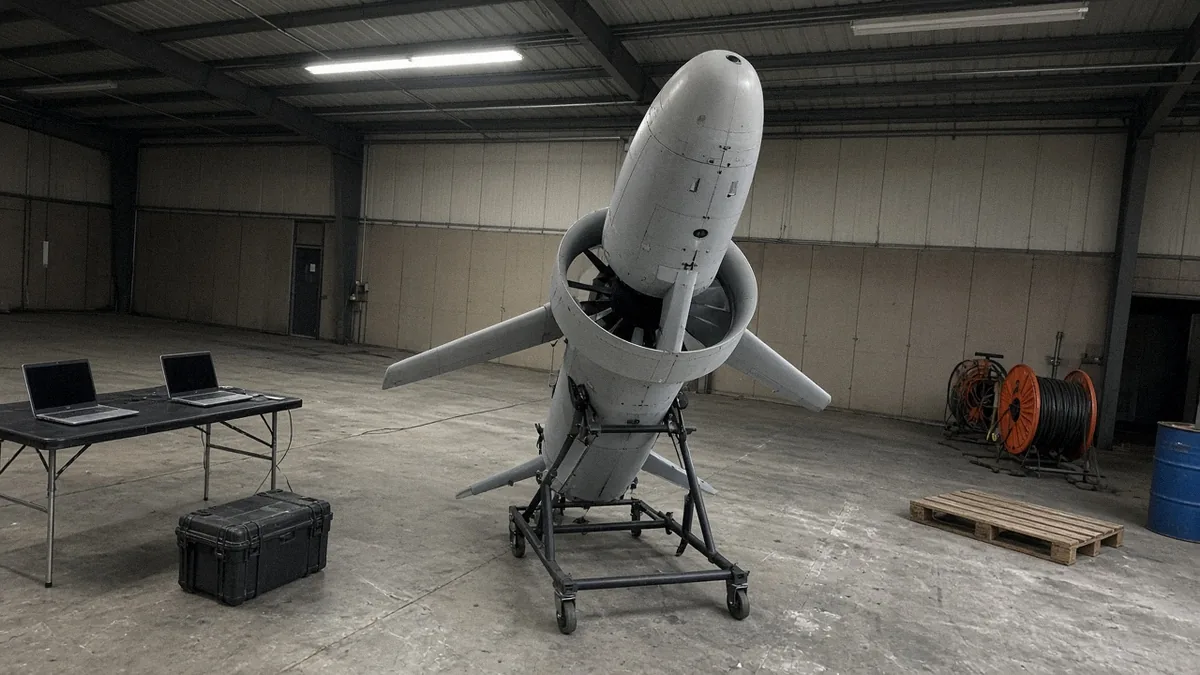
Shield AI’s last confirmed valuation is $12.7 billion post-money, set when the San Diego defense company announced a $1.5 billion Series G on March 26, 2026.
In mid-September 2026, The Information reported Shield AI was in talks to raise a Series H at a valuation of at least $20 billion. As of October 29, 2026, no closed round at that price has been announced, so $12.7 billion is the number you can cite as fact.
Key takeaways
How much is Shield AI worth today?
The official answer is $12.7 billion. That figure comes from Shield AI’s own March 26, 2026 announcement, and Reuters and Bloomberg reported the same number that day.
The headline “$2 billion raise” mixes two different kinds of money, which matters for how you read the valuation:
- $1.5 billion of Series G equity. This is the part that set the $12.7 billion price. Advent International led, with JPMorgan’s Security and Resiliency Initiative co-leading.
- $500 million of fixed-return preferred equity from Blackstone, plus a $250 million delayed-draw facility. Fixed-return preferred behaves more like expensive debt than ownership. It adds cash, but it didn’t set the share price.
Part of the money funded the purchase of Aechelon Technology, a defense flight-simulation company. Shield AI completed that deal in June 2026, and its simulation software now feeds the training pipeline for Hivemind, the company’s AI pilot.
Shield AI valuation history, 2022 to 2026
Shield AI spent years in the $2 billion to $3 billion range, then repriced fast once Hivemind started winning Pentagon programs. The jump from early 2025 to the reported 2026 talks is close to fourfold.
Why you’ll see “doubled”, “127%” and “140%”
Coverage of the Series G quotes different growth rates, and they’re all defensible. The difference is which 2025 number you start from.
Shield AI’s March 2025 F-1 round set a $5.3 billion valuation. The round was later extended by about $300 million, and several trackers quote roughly $5.6 billion after that. Measured from $5.3 billion, $12.7 billion is a 140% rise. Measured from $5.6 billion, it’s about 127%. “More than doubled,” Bloomberg’s phrasing, covers both.
Per-share prices tell a calmer story. Forge Global’s round data lists the F-1 at $77.85 a share and the Series G at $153.68, a rise of about 97%. Company value grew faster than the share price because more shares exist after each raise. If you’re judging what early investors actually gained, the per-share figure is the better guide.
What’s driving the Shield AI valuation
Revenue growth
Shield AI doesn’t publish audited financials. The most widely cited revenue figures come from Sacra, a third-party research firm that models private-company revenue: about $300 million for the year ending March 2025, up from roughly $267 million in 2024. Those are Sacra’s estimates, not numbers Shield AI has reported.
The firmer number is forward-looking. Co-founder Brandon Tseng and CFO Kingsley Afemikhe told Fortune in March 2026 that Shield AI expects more than 80% revenue growth this year, which works out to at least $540 million. That projection excludes Aechelon. The company has also been reported to target $1 billion in revenue by the year ending March 2028.
Contracts that changed the story
- Hivemind on uncrewed aircraft. The US Air Force picked Hivemind for work in its Collaborative Combat Aircraft program. On May 19, 2026, Shield AI announced that the Pentagon’s research and engineering office had selected it to put Hivemind on LUCAS, a low-cost one-way attack drone, so one operator can run a coordinated swarm. Breaking Defense reported that the contract value wasn’t disclosed; the company said it expected an operational demonstration in fall 2026.
- V-BAT. The vertical-takeoff drone is Shield AI’s main hardware seller, flown by US services and several allied militaries.
- X-BAT. On October 8, 2026, the Navy added a $150 million modification to its agreement for the AI-piloted vertical-takeoff fighter, and Shield AI matched it with $150 million of its own. That followed a $50 million Navy and Defense Innovation Unit action in August, which Shield AI also matched with $50 million, so its own capital across the two awards is $200 million. Shield AI says public and private commitments to X-BAT now total $400 million.
That mix of software and aircraft is why Shield AI gets compared with both software companies and hardware primes. It’s also one of the names, alongside Anduril and Helsing, in our guide to defense tech startups.
Is the valuation justified? The revenue multiples
Here’s what each valuation implies against each revenue figure. The revenue numbers are estimates or company projections, not audited results.
| Valuation | Revenue basis | Multiple |
|---|---|---|
| $12.7B (confirmed) | ~$300M, year to March 2025 (Sacra estimate) | ~42x |
| $12.7B (confirmed) | $540M+, 2026 (company projection) | ~23.5x |
| $20B (reported talks) | $540M+, 2026 (company projection) | ~37x |
| $20B (reported talks) | $1B, year to March 2028 (reported target) | ~20x |
For context, listed defense contractors usually trade at low single-digit multiples of sales. Shield AI is being priced like a fast-growing software company with a government customer base, not like a drone maker.
My take: $12.7 billion looks aggressive but arguable if 2026 revenue lands near $540 million. A $20 billion round would be a bet on 2028, not 2026. It only holds up if X-BAT and the Hivemind programs turn into production contracts rather than funded prototypes, and defense programs can slip with one budget fight.
Is Shield AI profitable?
Shield AI hasn’t disclosed profit or loss figures, and none of the 2026 coverage reports them. Anyone stating a profit number is guessing.
What is public points to heavy spending. The company has committed $200 million of its own capital to X-BAT across the August and October 2026 Navy awards, and it has announced plans for a large production site near Seattle. Raising $2 billion in one package also suggests the business isn’t funding that growth from profits alone.
Who owns Shield AI?
Shield AI is privately held. Brothers Brandon and Ryan Tseng founded it in 2015 with Andrew Reiter, and Gary Steele, the former Splunk chief, took over as CEO in 2025.
Outside owners include Advent International, JPMorgan’s Security and Resiliency Initiative, Andreessen Horowitz, L3Harris, Hanwha, Point72 Ventures, the US Innovative Technology Fund, Snowpoint Ventures and Riot Ventures. Individual ownership percentages aren’t disclosed, so any claim about who holds the biggest stake is speculation.
Can you buy Shield AI stock? Is Shield AI going public?
No, not on a public exchange. Shield AI has no ticker and hasn’t filed to go public. Pages showing symbols such as SHAI.PVT are tracking pages for private companies, not tradable shares.
Accredited investors can sometimes buy shares from existing holders on secondary marketplaces, usually with high minimums and limited information. Those prices can sit above or below the last funding round.
An IPO looks likely eventually, given the crossover investors in the Series G, but nothing is announced. A Series H at $20 billion would push that further out, not closer. A company that can still raise that much privately rarely rushes to list. If the letters past Series C are confusing, our explainer on what Series C funding means covers how late-stage rounds work.
FAQ
How much money has Shield AI raised in total?
Estimates range from about $2.5 billion to $3.5 billion, depending on what’s counted. Lower figures cover priced equity rounds only. Higher totals, such as Tracxn’s $3.52 billion, add venture debt and Blackstone’s $500 million preferred equity. Shield AI hasn’t published a single official lifetime total.
What does Shield AI make?
Shield AI builds Hivemind, AI pilot software that lets drones and aircraft fly missions without GPS, radio links or a remote human pilot. It also makes the V-BAT vertical-takeoff drone and is developing X-BAT, an AI-piloted fighter that takes off and lands vertically. Customers are mainly the US military and allied governments.

Discussion