How Does Upside Make Money? Inside Its Profit-Share Deal With Stores
How does Upside make money? Stores pay it a cut of the extra profit it brings them, and part of that becomes your cash back. The 2024 numbers, explained.
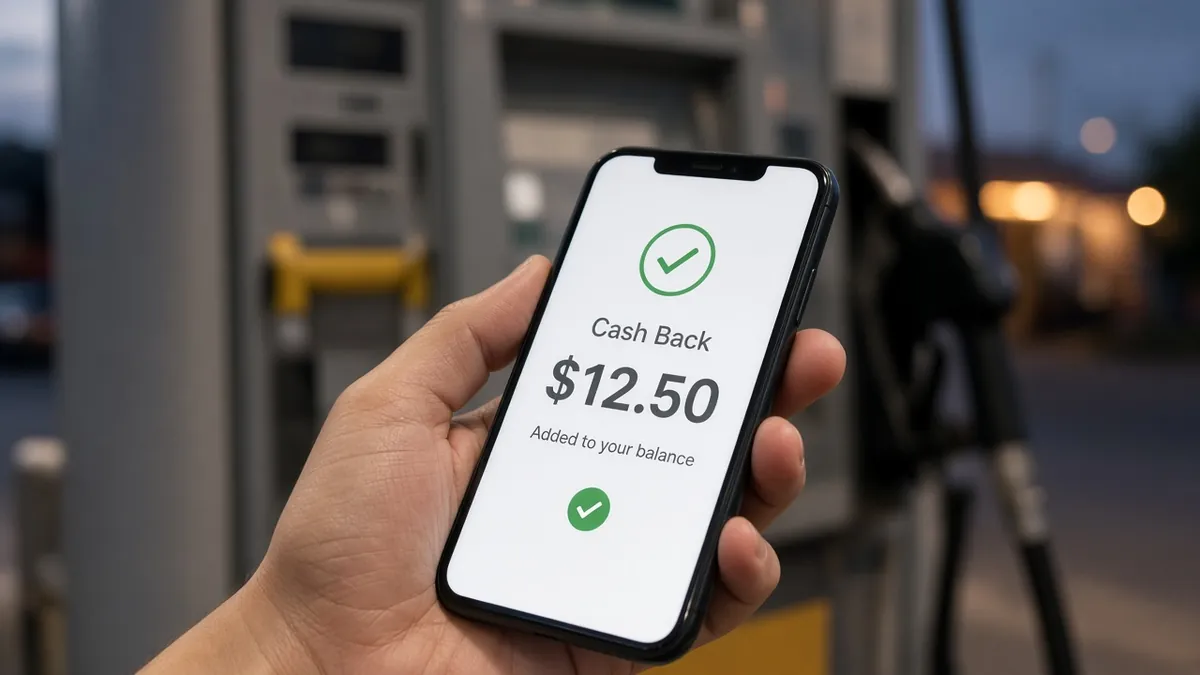
Upside makes money by taking a share of the extra profit it brings to gas stations, grocers and restaurants, then passing part of that share back to you as cash back. Its help center says it doesn’t get paid until both the store and the shopper come out ahead.
So the app isn’t funded by you. You download it free and the stores pay. The interesting part is how Upside proves a sale was one the store wouldn’t have made anyway.
Key takeaways
How does Upside make money?
Through profit-sharing agreements with the businesses on its app. You claim an offer, buy at that location, and Upside checks the purchase through a linked card or a receipt. If the visit was profit the store wouldn’t otherwise have earned, the store pays Upside a cut, and Upside funds your cash back from that cut.
Upside’s help center explains it in one line: it shares in the profit from purchases it brings in and proves. Its business site adds that joining is free for retailers and that they pay nothing for impressions, clicks or visibility, only for delivered incremental profit (upside.com, accessed November 2026).
e.g. cents off per gallon at a nearby station
Upside confirms it via linked card or receipt
Your spend vs. similar non-users
Only on profit it wouldn’t have had
Part becomes your cash back, Upside keeps the rest
How money moves through Upside. Based on Upside’s help center and business pages; the split between your cash back and Upside’s cut isn’t published.
How Upside decides a sale was “extra”
This is the whole business. If Upside paid stores for customers who’d have shown up anyway, retailers would quit. So it builds a control group.
According to Upside’s measurement methodology page, each user who claims an offer is paired with 10 to 100 non-Upside shoppers with similar purchase histories. Their average spending is treated as what you’d have spent without the app. Anything above that is counted as incremental and credited to Upside.
The page’s own worked example shows a $33.23 transaction that produced $2.56 of incremental profit for the retailer. Upside says retailers receive reports of incremental sales, promotion costs and profit-share fees. What it doesn’t publish is the fee percentage or the formula behind it.
Our read: this explains why offers vary so much between users. An offer is priced to change behavior. If you already buy gas at a station every week, there’s little incremental profit to share, so you shouldn’t expect your best offers there.
Who actually pays for your cash back?
The store does, out of profit it says it wouldn’t have made. Upside gave the clearest numbers in its 2024 Year in Review, published January 9, 2025: in 2024, retail partners earned $605 million in incremental profit and consumers got $245 million in cash back.
Put those side by side and you can see who the model favors. The shares are our arithmetic on Upside’s figures.
| Where the value went (2024) | Amount | Share |
|---|---|---|
| Incremental profit for retailers, 2024 | $605 million | About 71% |
| Cash back to users, 2024 | $245 million | About 29% |
| Upside’s own cut | Not disclosed | n/a |
Source: Upside, 2024 Year in Review (January 9, 2025). Shares are our calculation.
The retailers got the bigger slice, which makes sense. A retailer that doesn’t clearly profit stops funding offers, and then there’s nothing for users. The running total keeps climbing: Upside said on August 26, 2025 that its users had earned more than $1 billion in cash back in total.
Other ways Upside earns
The app isn’t the only door. Upside’s offers also run inside partner apps through its API, and its August 26, 2025 announcement named Uber, Chime and Payfare among them. Each partner extends Upside’s reach to people who never download the app, which means more measured purchases for the same retailers.
Upside also sells retailers a pitch that ad networks can’t: exclusivity. Its business site says it limits nearby competitors from joining, and it says its app and partner network reach 35 million consumers, with more than $100 million spent each year on bringing them in at no cost to retailers (upside.com, accessed November 2026).
It’s a cousin of the receipt-rewards model, where brands pay for the points Fetch hands out. The difference is that Upside charges on measured extra profit, not on a scanned receipt.
Does Upside sell your data?
Upside says no. Its business pages state that it never sells personal data and that retailers only see insights about their own customers. It does use anonymized transaction data to build the control groups that set its fees.
Is the Upside app really free?
Mostly. Downloading and claiming offers cost nothing. The help center lists a $1 fee on bank cash-outs under $10, and no fee on gift card redemptions. Upside also dropped ongoing PayPal payouts in late 2025, so most users now cash out to a bank account or a gift card (Upside help center, accessed November 2026).
The bigger “cost” is behavioral. Upside makes money only when it changes where you shop. If an offer pulls you a few miles out of your way, the fuel and time can eat the saving.
What’s the catch with Upside?
There are three, and none of them is hidden:
- Offers only work at participating locations, so your favorite station may not be on it.
- The amounts are small per purchase. It’s a discount, not income.
- Some purchases need a receipt upload or card match, and the cash back only lands once Upside verifies it.
If you drive past several stations anyway, the trade is easy. If you’d need to detour, run the math first. It’s the same bargain behind Waze, another free driver app paid for by businesses: the app is free because someone wants to steer where you go.
Do you really make money on Upside?
You save money; you don’t earn it. Upside said on August 26, 2025 that frequent users earn an average of $270 a year. For someone filling up weekly, that’s real but modest, and it depends on living near participating stores.
Stacking helps. Upside’s app listing pitches its cash back as something you earn on top of your existing credit and debit card rewards, because the offer comes from the store, not your bank.
Is Upside profitable?
Nobody outside the company knows. Upside is private and doesn’t publish revenue or profit. The last valuation it disclosed was $1.5 billion, set in April 2022 when it raised $65 million in equity and $100 million in debt led by General Catalyst, according to the company’s announcement.
Our read: the model is built to avoid the classic cash-back trap of paying for sales that would’ve happened anyway. Whether it makes a profit depends on how much of each share it keeps after funding offers and its $100 million-plus yearly marketing budget, and those are the two numbers it doesn’t share.
If you want to compare it with other ways companies charge for value, our guide to 10 types of business models puts profit-sharing in context.
FAQ
Is Upside a public company?
No. Upside Services, Inc. is privately held and based in Washington, D.C., so you can’t buy its stock on an exchange. Its backers include General Catalyst, Bessemer Venture Partners and Builders VC. As a private company, it doesn’t publish revenue, profit or the size of its cut from each sale.
Why do Upside offers differ between people?
Offers are personalized. Upside sets them based on your past shopping so they’re big enough to change where you buy, while still leaving the store profitable. Our read: a regular customer at a station creates little extra profit there, so that customer will likely see smaller offers at that location than a new shopper.
Discussion